

“The best way to have a career you love is if YOU are dedicated to the hard work it will take,” Angela Felice Mahoney, designer of I Can Work curriculum
By Ron Sandison
As a young adult with autism my greatest struggle was gainful employment. After I graduated with my Master of Divinity, I experienced a two-year employment dry spell working customer service in a skateboard shop for minimum wage.
Whenever I meet an expert on autism and employment I love to interview him or her and gain their insight. For more than a decade, Angela Felice Mahoney, a life skills special education teacher at Rogers Park Middle School in Danbury, Connecticut has been designing a curriculum I Can Work to help students with autism learn vocational skills for employment.
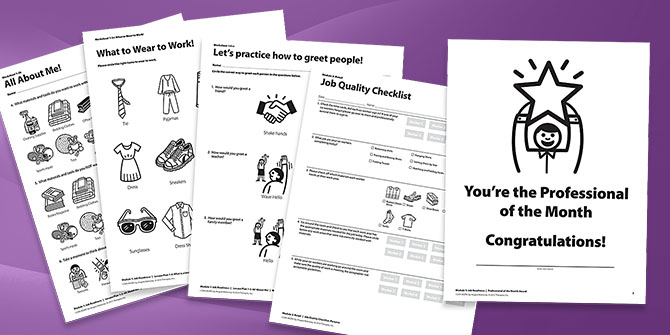
Talking with Angela on the phone, I was amazed at her I Can Work curriculum and her insight for individuals with autism and disabilities seeking employment.
1. What are four tips you give to those with autism/Aspergers about seeking employment?
First, everyone starts somewhere. We have all had the ‘dirty’ work that helps build the social and work skills needed for success in future job placements. Learn from these jobs.
Second, do your ‘homework’. Be sure to understand the employment opportunity at hand and what it entails. Is it really a job you want to do daily? Can you manage the setting? Consider these factors before accepting a job.
Third, build your communication skills. Learning how to effectively ask for help as well as other work related questions. This will increase your chance of successful employment.
Fourth, go out of your comfort zone for growth. Yes this is a tough one, but challenging yourself daily is a good thing! Try a work related task you don’t like, make a call to someone and set up an interview or anything else you can think of that gives you goosebumps!
2. How can a parent help prepare their child with Autism/Asperger’s for employment?
The keys to solid growth are opportunity, consistency and repetition. Consider what your child is currently working on, and then ask yourself if you can add additional experiences to solidify a stronger vocational foundation. Make chores meaningful and connected to future goals. Create a small ‘work skills center’ in your home and have your child track the jobs completed as well as reflect about the jobs.
When in the community, discuss the jobs you see. Encourage your child to identify jobs and what items the employee requires to successfully complete their task. Build on work related vocabulary. Check with your child’s teacher for in-house job opportunities. Inquire about off-campus jobs with a variety of settings.
3. How can teachers and educators help prepare young adults with autism for the workplace?
Pre-vocational planning is a model designed to prepare students for a successful transition to meaningful, paid work in the community. It commonly involves training in the basic work skills required for a typical employment setting. What I am suggesting is an earlier intervention coordinated to promote age-appropriate growth during the critical years of middle school, ages 11-14— a ‘pre-vocational’ intervention if you will.
Create a ‘work skills center’ in your classroom with a place to sign in/out each time for work. A variety of tasks can be introduced and completed in this space. Have each individual track the jobs completed as well as reflect about how they felt about the task. This builds a sense of responsibility and work readiness.
It is important to begin the real life job experiences at the middle school level. Develop a variety of in-house job opportunities as well as off-campus experiences in a variety of settings.
4. What are three essential skills for gainful employment?
Three essential skills for employment are communication, consistency, and hard work.
5. What should a boss or supervisor training an employee with Autism/Asperger’s understand about the condition?
It’s time to break the mold of what a job or employment looks like. It’s about looking at the task at hand and breaking it into pieces that fit the strength of the employees. One large work goal and can be supported and completed by many capable hands. Take the time to learn what each employee does well and with passion, then assign those parts of the whole task and watch the success unfold!
6. What advice would you give to a young adult with autism struggling with unemployment and searching for a job?
Discover what your passion is. What do you think about often and enjoy doing? Find a way to market that and share it with the world. The best way to have a career you love is if YOU are dedicated to the hard work it will take.
7. What are some careers you recommend for people with Autism/Asperger’s?
Finding a career is a personal journey for all individuals. There are so many wonderful and unique ways to be successful that I couldn’t narrow down recommendations. I do however recommend knowing yourself and what environment you work best in. From there you can narrow down careers that fit your strengths and challenges. Be sure to challenge yourself and try a variety of roles and job settings. Track how those jobs go and what is working and not. Over time a pattern will develop and you will see a consistent area or setting you prefer. From there you can develop a plan for employment in a career you will enjoy for years to come!
Angela Mahoney, MEd is a middle school special educator in a remarkable program in Danbury, CT called Skills for Life where she teaches students on the autism spectrum. Skills for Life is a functional skill based program focusing on developing communication skills through sensory focused, hands-on activities in the classroom and in the community. She travels the United States sharing her vocational and life skills program I Can Work! with educators and parents.
You can learn more about Angela and her work at http://icanwork.therapro.com
Follow her on Facebook for weekly updates and new ways to increase vocational learning for all at https://www.facebook.com/ICanWork2013/
***
Ron Sandison works full time in the medical field and is a professor of theology at Destiny School of Ministry. He is an advisory board member of Autism Society Faith Initiative of Autism Society of America. Sandison has a Master of Divinity from Oral Roberts University and is the author of A Parent’s Guide to Autism: Practical Advice. Biblical Wisdom published by Charisma House. Ron has memorized over 10,000 Scriptures including 22 complete books of the New Testament and over 5,000 quotes. Ron is also a Board member for the Art of Autism.
Ron frequently guest speaks at colleges, conferences, autism centers, and churches. Ron and his wife, Kristen, reside in Rochester Hills, MI, with a baby daughter, Makayla Marie born on March 20, 2016. You can contact Ron at his website www.spectruminclusion.com or email him at sandison456@hotmail.com


