

When disability is cool and collectible, it may seem like recognition, but there is too much room for marginalization.
By Angela Weddle
After reading The Art of Autism’s facebook post on the Creative Growth Studios, I was left with some realizations and questions both about the art world, in general, and how and where disabled artists fit into it. [Editor: The Art of Autism posted on Facebook this New York Times article: A Training Ground for Untrained Artists about Creative Growth Studios]
The Creative Growth Studio in Oakland, Califorina, indeed sounds like a magical place. A place where one can create, and/or discover that one can create a whole world. Until recently, it was a place where the artists were shielded from the pressures of exhibiting in mainstream galleries, what to price the work at, or appeasing collectors.
I have been an artist all of my life, picking up a pencil at age three, and drawing and painting from then on. I have some artistic training. I went to a prestigious local, arts high school. I have one year of college under my belt. I have been exhibiting non-stop for 5 out of 6 years, that I have resided in San Antonio, TX. I have a knowledge of art history. And still a museum curator referred to me as an outsider artist.
I didn’t mind it. I understand that I don’t have the important things to the art world. An MFA, art that doesn’t make sense, but has people standing around pretending that it does, an artist statement that reads like a dissertation.
I make art for the joy of it. I think money and galleries taint that. And I am burned out.
Most of my finest works are in sketchbooks, and for six years I have had an internal struggle on how I can best share my art with the world, and whether the traditionally accepted path to success was that. Did I even want that kind of success? Did I want to paint cactus, because I live in the southwest, and that might sell better? Did I want to paint huge canvases because other artists encouraged me to, even though I am intrigued by the intimacy of small works? Did I want to keep socializing at the expense of my mental health, feeling drained, where I ended up drawing at exhibitions just like one of the members of Creative Growth Studios did?
I didn’t want to do any of those things, so I stopped. I created what I wanted to create. Perhaps, sacrificing getting into more prestigious galleries.
The article about Creative Growth Studios, focuses a lot on language – on getting rid of terms such as outsider art, Art Brut, etc. and replacing it with artists who don’t know they are artists.
Why does the language matter? Humans create and creations should be appreciated. The article debates whether disabled artists should be shielded from the pressures of the art world, equating the pressures with life. I say, they had a life before. They don’t need people trying to dissect the meaning of their work, of every letter and line, and how they are dressed. I wonder if this new model is sustainable or healthy for the artists.
Will the purity of their art remain? Or will they end up burned out and disillusioned like I am. Sure the recognition was nice at first, and the money, when it came, too. However, I have been to far too many exhibitions where the art is barely talked about, as people are gathered around the wine and cheese, and standing around looking cool. This is not why I got into making art. I’m sure this isn’t why the individuals at Creative Growth Studios do it, either.
Now that collectors are interested in these artists who don’t know they are artists, a statement, that doesn’t fully resonate with me; I wonder how that purity can remain. Works that were hung on the wall with narrow space between others, are now professionally framed. Certain artists and works are deemed “important”. And some artists are very much of aware of how much they are selling, and what’s selling, feeling the pressures that come with ‘success.” The debate continues as to whether the artists’ disability is relevant to their art, or whether it should be ignored and all of the art should be referred to as contemporary art.
I feel that my autism definitely influences my process and that I am a contemporary artist. I don’t understand the debate and why these things have to be mutually exclusive. I wish that all artists made art for the joy of it. Isn’t that what we did as children? We didn’t dissect works and write statements. The work stood on its own, from the heart and soul. When disability is cool and collectible, it may seem like recognition, but there is too much room for marginalization. When institutions go from enabling creation, to cultivating curation, it becomes the same as any other venue. The purity that they want to remain is at stake. The joys of creating should always be at the forefront.
——
Angela Weddle is a visual artist and illustrator who is both self and formally taught. Her favorite mediums are pen and ink and watercolor, though well versed in multiple media. Although, she has exhibited professionally, her favorite format is the sketchbook. She hopes to one day self-publish her books of drawings and paintings to share her art with a wider audience. Angela’s art can be viewed at thetranscendentartofaweddle.weebly.com
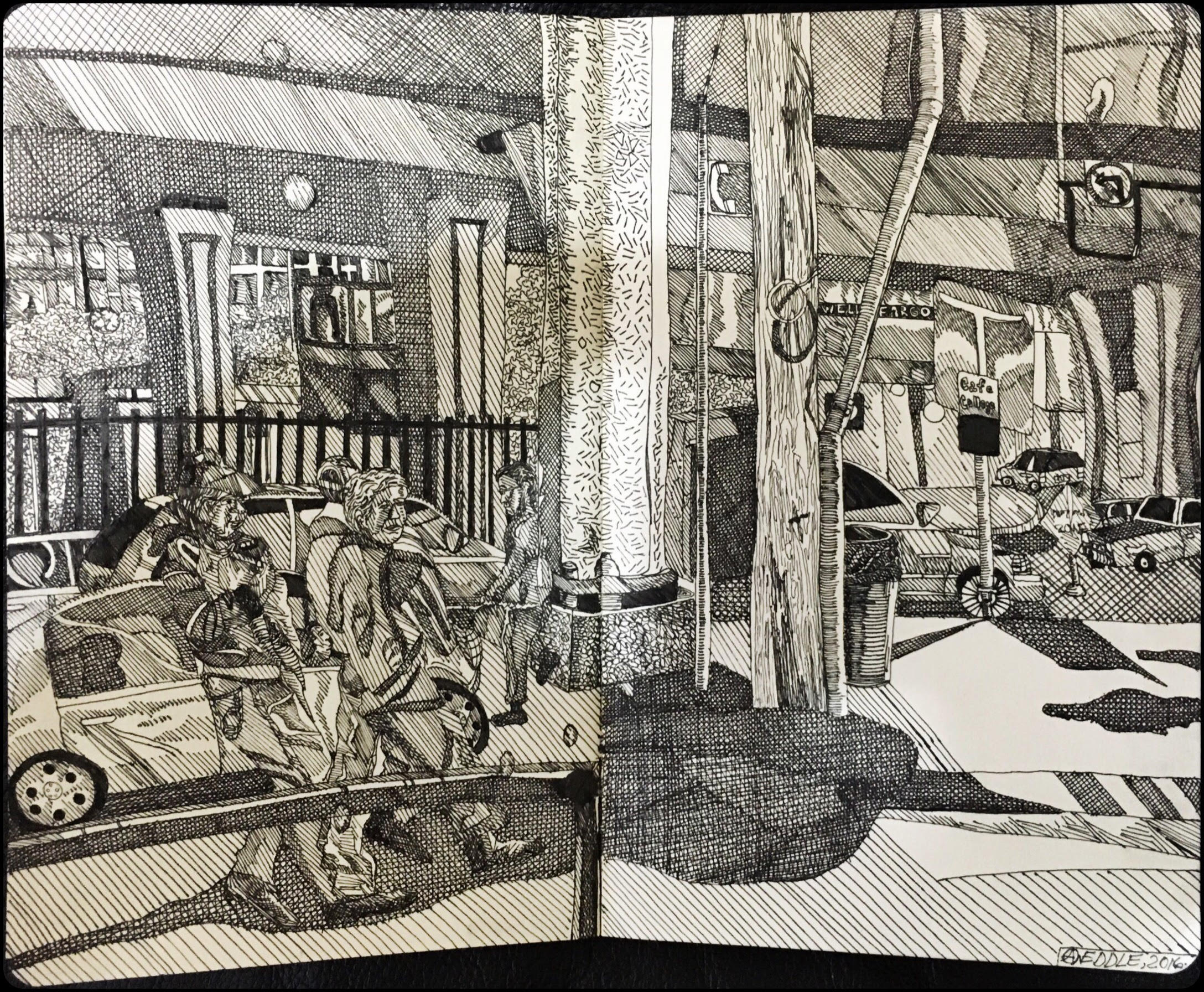
Angela Weddle “Bridge Under Commerce Street” pen & ink
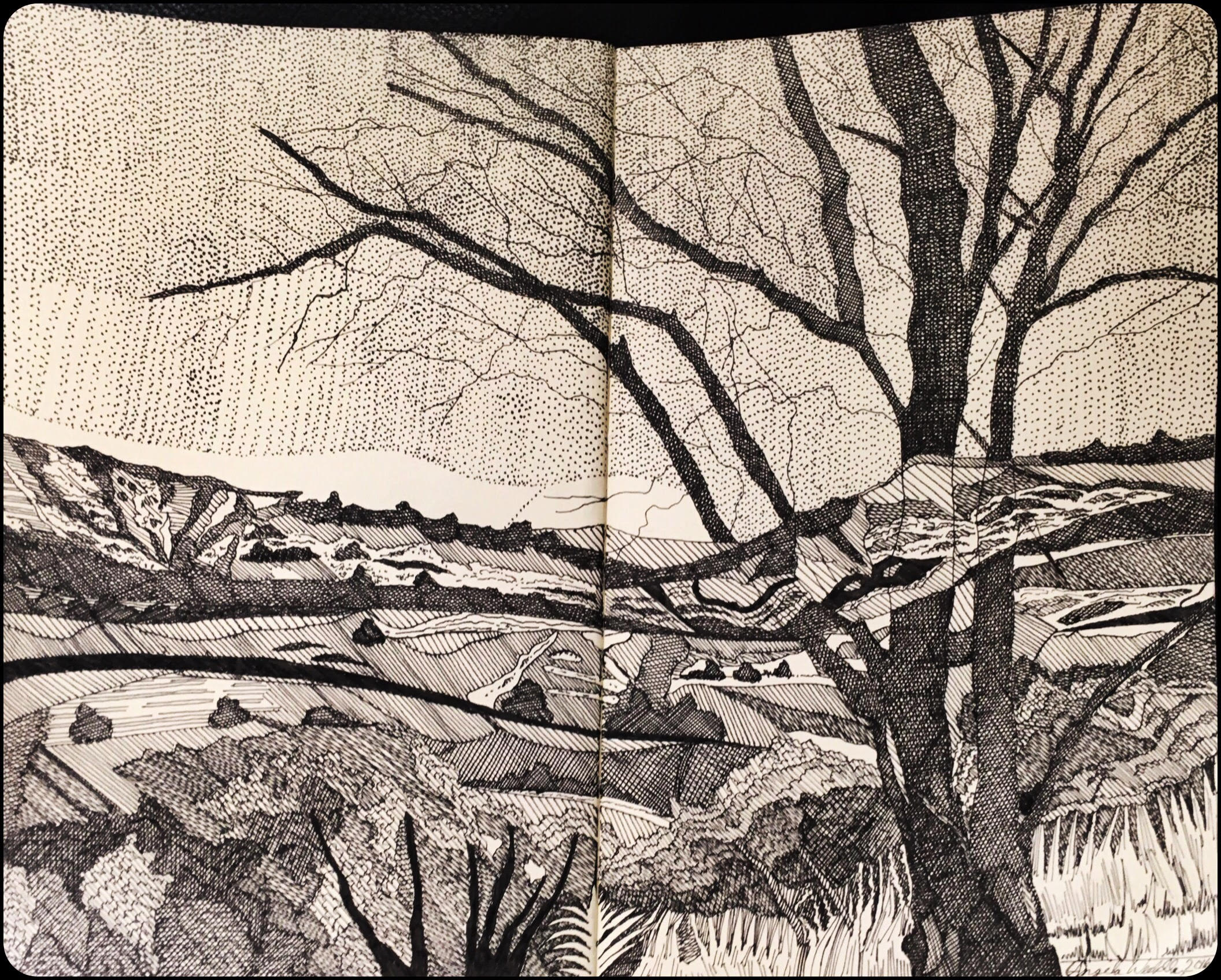
Angela Weddle “Sunrise over Davis Mountains” pen & ink
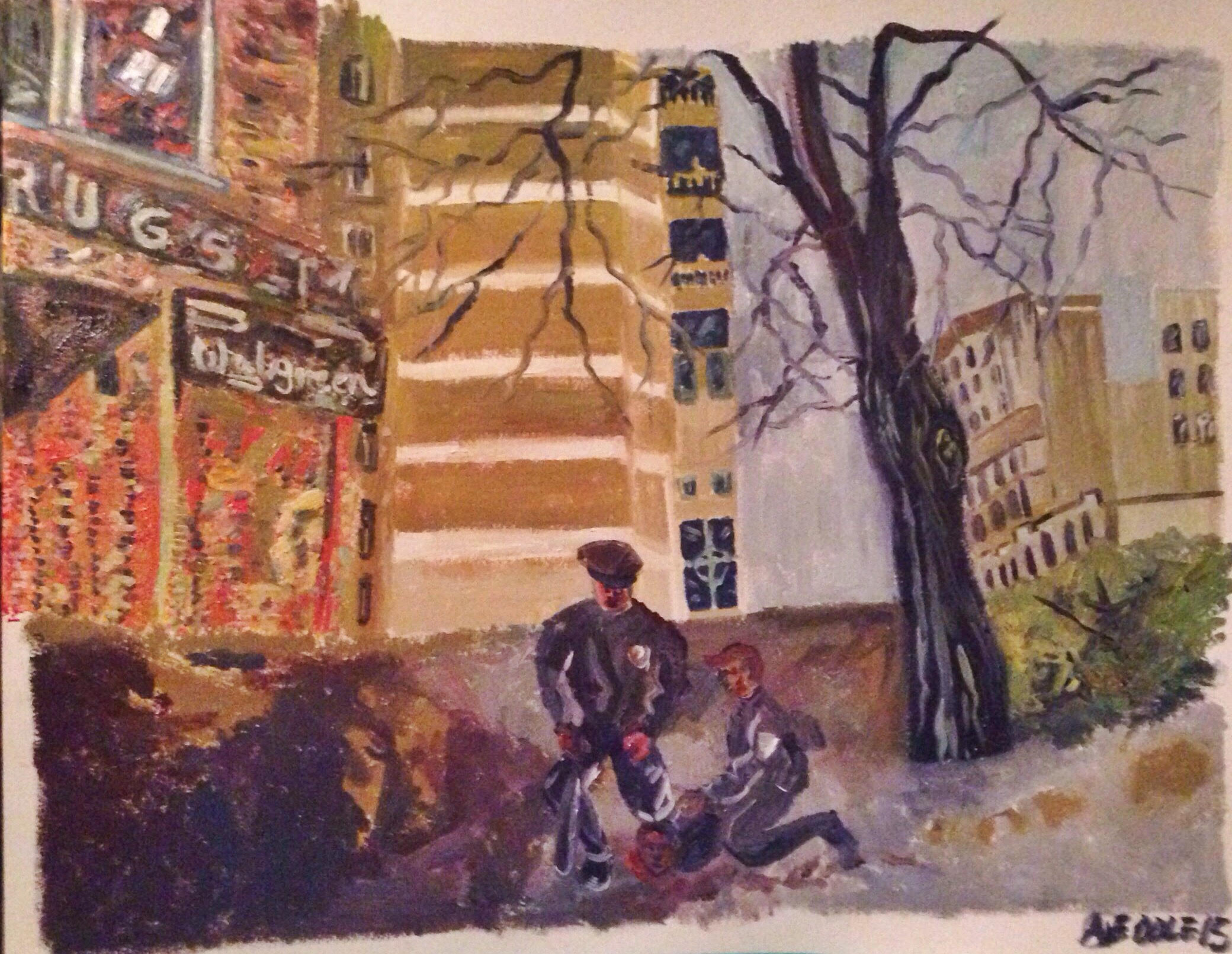
Angela Weddle “The Takedown” Oil


