

Autism comic strip by autistic artist Carissa P. depicts “Baby Talk”
by Debra Muzikar
A couple weeks ago my Facebook friend Stefanie shared with me this audio clip she recorded on her I-phone.
Stefanie just turned 49. In the audio clip you can hear her neighbor (who has known her since she was a child) talking to her as if she is three years old. Of course Stefanie was offended! Who wouldn’t be?
When Kevin was 8 and was in second grade he had an “inclusion specialist” who insisted on talking to him in this same sing-songy baby voice. She’d talk to the other kids in a normal, respectful manner. I tried to convey this was not healthy for Kevin, yet the baby talk continued. In Special Education, best practice is to assume competence. Yet I’ve heard from so many that baby-talk is prevalent.
A couple days ago Carissa P, 16 years old autistic, shared the series of cartoons below:
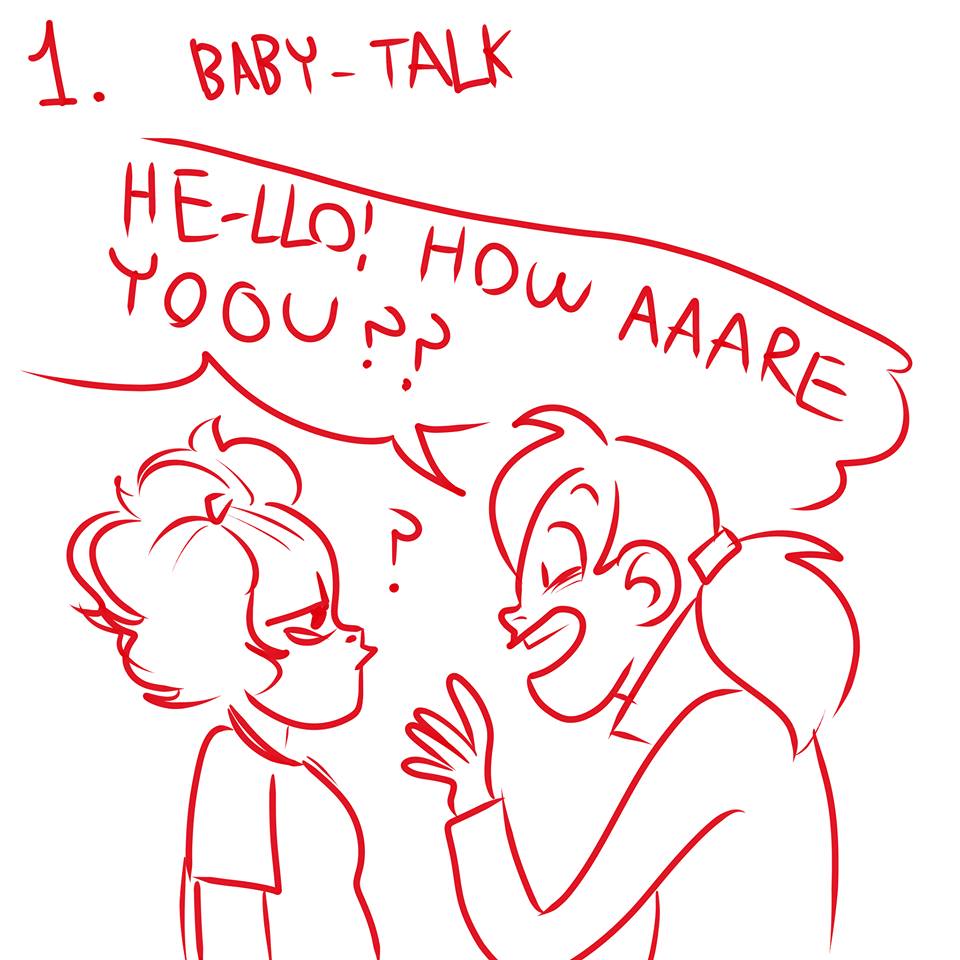
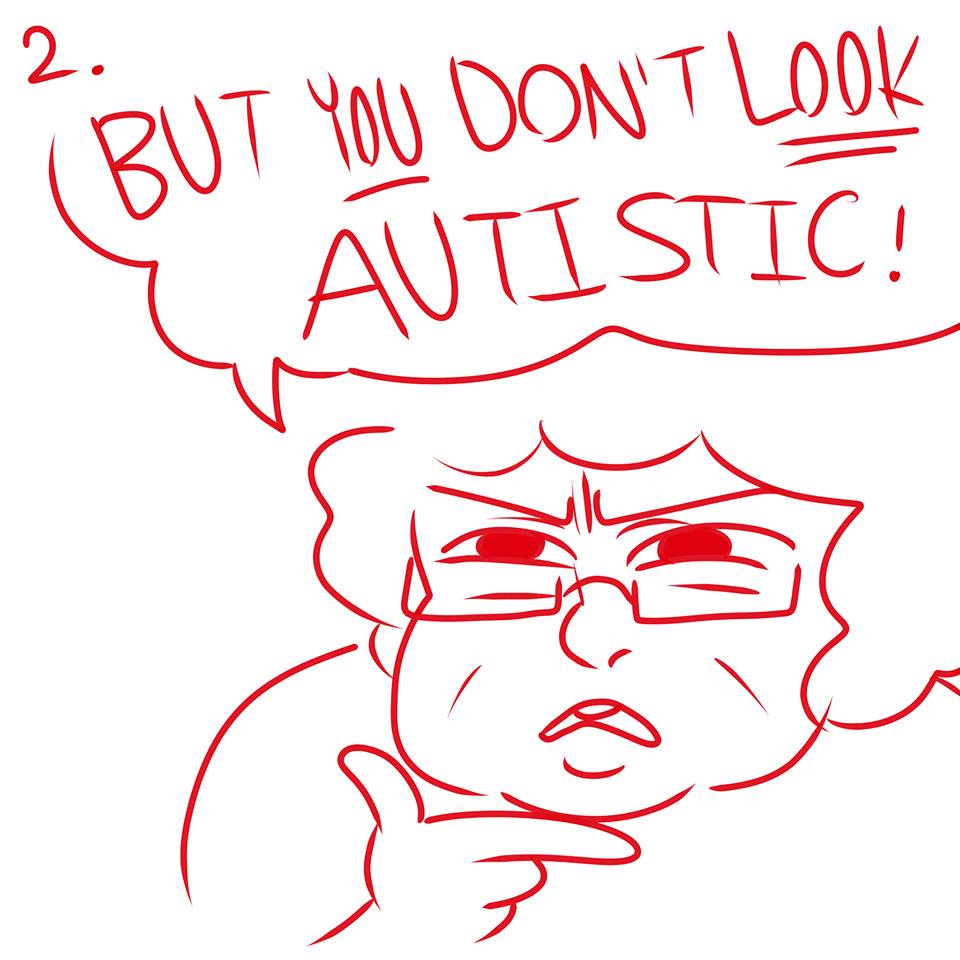
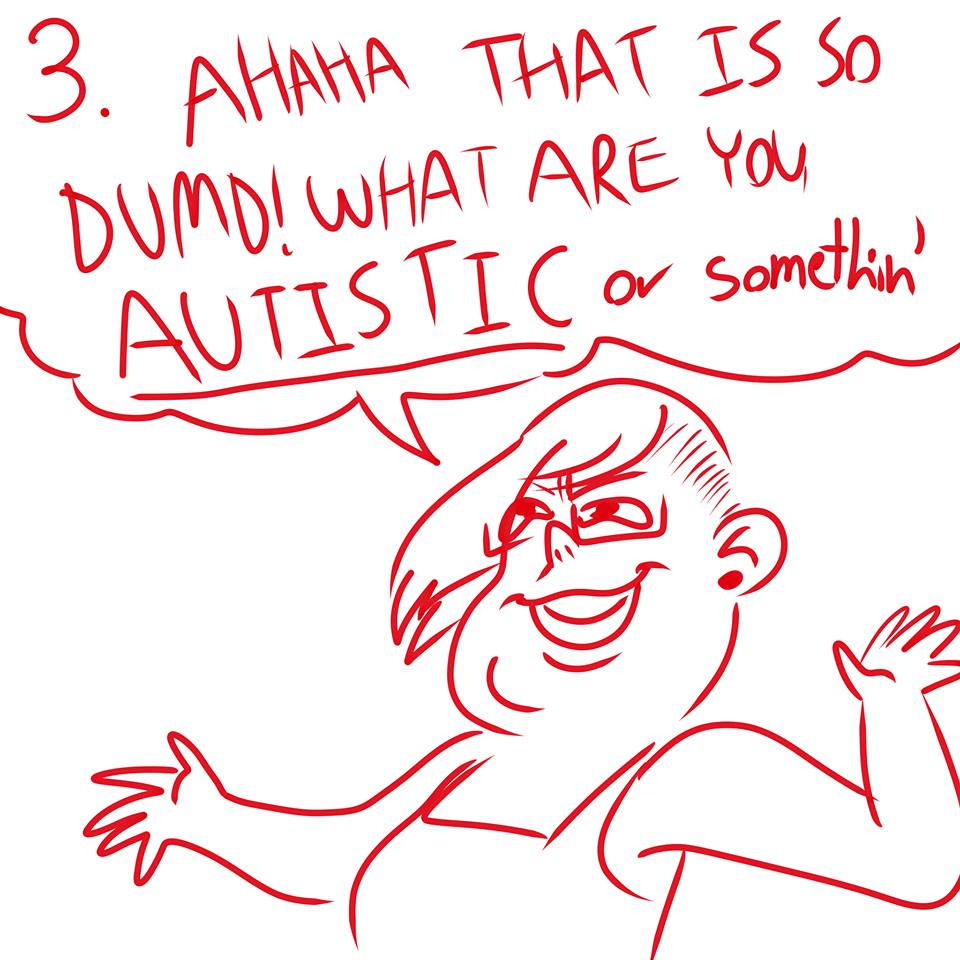
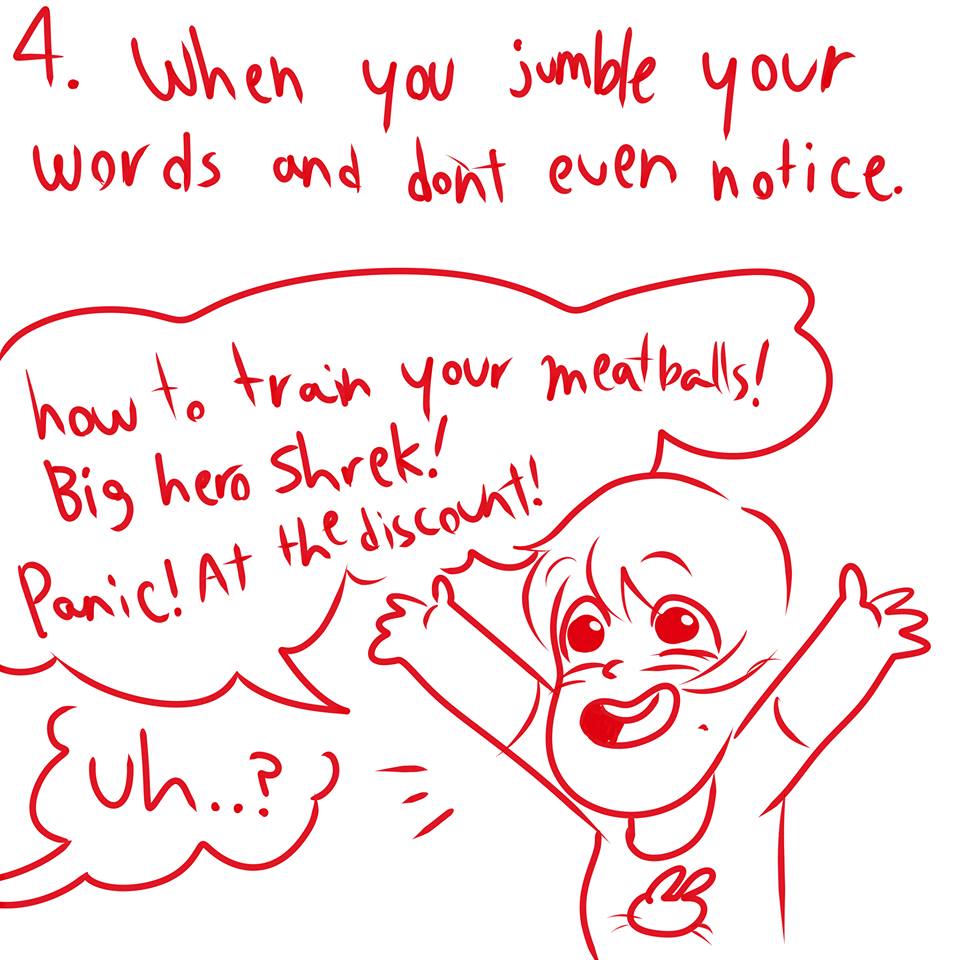
When I queried my Facebook friends I found this to be a sore point among many.
Many Autistic people experience baby talk
“I do mind if someone starts taking to me like if I was 2 years old when they find out I have autism… Soooooo annoying..Yes I have autism, but I also have a 4.0 in University. Just because we have autism does not make us stupid. However I can’t get mad at the person that talks to me like a 2 year old, because he/she is just ignorant about autism, most don’t mean to be rude,” Dani Bowman, Autistic
“That kind of thing comes out of the institutions and the misconception of baby talk vs. slowing down a bit and speaking more simply,” Andy Dreisewerd, Autistic
“I hate when people do this! I see therapists doing it with clients we share, especially non-speaking clients! I have also experienced it minimally, but more as a woman than as an autistic adult since not everybody who I see randomly knows I’m autistic,” Annette Sugden
“I dislike it, immensely. I’m 38 years old..not months old. I have a more expansive vocabulary than these people do … and they want to talk DOWN to me? I’m autistic, not an infant,” Heather Johnson
“[Neri was] 16 YEARS OLD at summer camp [where the camp counselor sang] … BINGO THE DOG song. I removed him from camp and the year after asked the system to pay for him to be at the Gateway Art Studio,” Nirith Avraham, parent
“I get people talking down to me in baby talk as I have a developmental delay and its so annoying… Sadly I’ve gotten used to it and I don’t bother lecturing people anymore about it as its pointless. They don’t listen. Even my job where I work as .. a cleaner they talk to me like a baby and I am 36 yrs old not 36 months old. They treat me like I am a toddler … like I know nothing,” Debbie Ann
“My kids have told me they get really upset when they’re talked to that way and it makes them feel like there being talked down to,” Veronica Banchs, parent
“My personal favorite worst that always happens when I take Jeremy to the hospital: the nurses and doctors speak loud and slow, even after I explain ‘Jeremy has autism, but he understands everything -he graduated from high school. But he has sensitive hearing, please speak quietly.’ I want to say ‘Which part of please speak quietly did you not understand?’ Perhaps I should start saying ‘Use your inside voice,'” Chantal Sicile-Kira
Don’t assume incompetence
“This reminds me of the movie Wretches & Jabberers with Larry Bissonnette and Tracy Thresher, two assistive-communication-device-utilizing adults on the spectrum.
One of the most profound moments in the movie, at least for me, is when Tracy shared some extremely advanced, enlightened, metaphysical thoughts, and it became apparent that not only was he not ‘cognitively delayed’…..but extremely intelligent, evolved, compassionate and empathetic, regardless of having lead a life of being marginalized and misunderstood,” Kathleen Tehrani, Autism Brainstorm founder
People change when they know you have autism
“I always notice a change in how people talk to me after I have just given a speech on my autism. Some then do not approach me to ask questions as they feel it might be too much for me. Best way to deal with this is to talk about it. Keep reminding people that there is no need to act like this and why. Elijah [Gee’s son] is often treated as if he cannot hear or even worse as if he is not there at all. Be patient with people. They do not know it any better. This is why talking about autism is so important…talking with people…getting together…getting to know each other…I find this more important than lighting up buildings blue for one day,” Gee Vero, Autistic
Sometimes parents are the problem
“What you are describing is unacceptable, period! To play devil’s advocate here … often when I speak to a child or adult [with their parent present] as if they understand everything I am saying in a very grown-up manner (which I do ‘as if’), parents ‘jump in’ to answer, correct, save or otherwise without giving time for the person to answer or (when no language is present, especially) react. This is the conundrum for me,” Keri Bowers, parent
Degrading behavior may becoming from a place of kindness and ignorance
“They don’t mean to be ignorant or mean… they really should know better. My mom says that older people … it’s just how it was back then,” Stefanie Sacks, Autistic
“It’s probably ignorance rather than malicious. I’ve heard people talking loud to blind people,” Lenny Schafer, parent
“[It’s] mostly ignorance,” Denise Angele, parent
“Many people talk baby talk when they are trying to be gentle and loving, don’t be too hard on them. Mom was a paraplegic and many people talked baby talk. She was a very gentle soul and talked right back at them with baby talk, their language, not hers. Being kind was easier than trying to educate,” Susan Ramos Calderwood Spadaccini
A sense of humor helps
“To their credit, my parents never spoke baby talk to us on principle. However, when I couldn’t process a list of directions, she [my mom] would…slow….down. My response, which works to this day, was, “Why. Are. We. Talking. So. Slowly?” I lucked out. Both of my folks, now in their eighties, have retained wonderful senses of humor,” Carol Greenburg, Autistic
Baby Talk is better than ignoring
The lesser of two evils is baby talk, in my humble opinion. I watched my son Kevin being ignored for many years. At least when people talk in baby talk they are trying to engage the person.
***
Cartoon artwork courtesy of Carissa Paccerelli aka Rissa P. Visit her art on her website.
See also Understanding the Spectrum: A Cartoon


