

Description
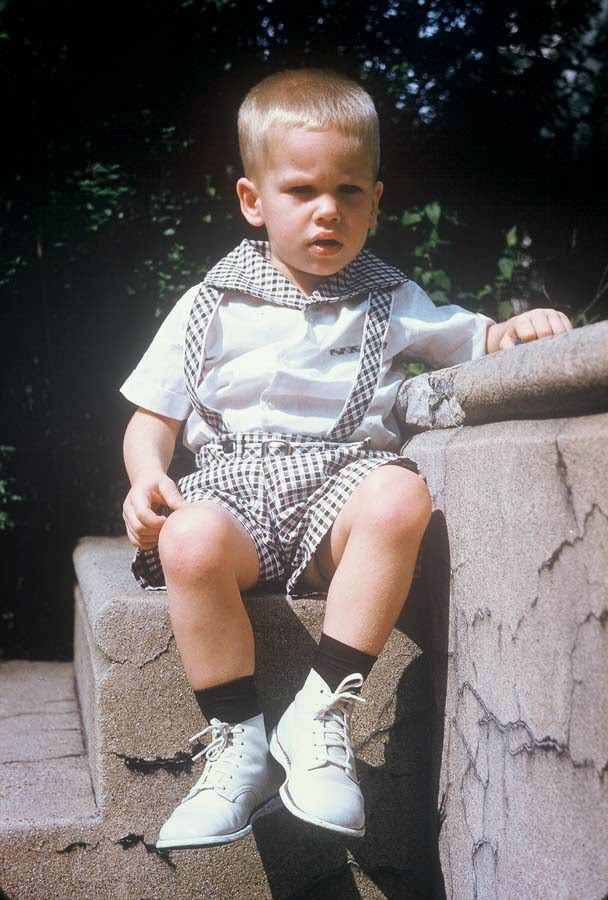 |
| Me, at age 2. Even then, I was #notmssng (c) John Elder Robison |
Yesterday a new hashtag campaign appeared in my Twitter feed – #MSSNG. It seemed to refer to autism, and a new research project. I had an immediate reaction, based on my interpretation of the letters in the context of the autism discussion - I thought, Missing? Certainly not. We may be gifted or we may be disabled but we are definitely here. And we are complete humans. I posted that right away, and it launched a flurry of discussion.
My response seems to mirror the prevailing sentiment with respect to this campaign - autistic people are not missing, and nothing is missing from us. In fact, a counter hashtag had appeared moments after I read it - #NOTMSSNG.
My response seems to mirror the prevailing sentiment with respect to this campaign - autistic people are not missing, and nothing is missing from us. In fact, a counter hashtag had appeared moments after I read it - #NOTMSSNG.
I wondered what the campaign was about, so I went looking. It’s an initiative by Autism Speaks to sequence the genomes of 10,000 individuals touched by autism. In my opinion, that is a worthwhile thing to do. I’ve written before about the value of genetic research. But it is far from my #1 priority for the autism community. More on the why of that later.
Their choice of a name turned mssng from an announcement of a science initiative to a public relations debacle. I think it’s seriously misguided on several fronts.
First – the community side
As I said in the beginning, autistic people are not missing. We have always been here, and we always will. Yet I and many other autistics live with the knowledge that we occupy a world where autism is widely perceived as a disease or defect. I can’t speak for other autistics, but I don’t much care to be seen as diseased or defective. Nor do I like being seen as “missing pieces,” which the name mssng implied.
To say that is not to deny the very real ways autism disables us. Rather, it’s a simple statement of fact. Autism is a neurological difference, not a sickness. As such, it’s here for a reason. Who are we, to second-guess that? Remediate its disability – sure! Wipe it from the world – that’s crazy talk, and societal suicide.
I’ll bet every autistic kid in America knows how it feels to be told we were missing some of our marbles growing up, and reminding us of that in the context of a research initiative is at best insensitive and at worst seriously offensive.
It’s not a name I’d have chosen. I don’t know who did choose it but I’d bet they were not autistic.
An organization run by autistic people would not have made this mistake. An organization run by non-autistics, autism parents, and autism grandparents DID make this mistake. Or perhaps to them, it’s not a mistake. It’s just “Some autism parents speaking.” But that is not what their organization’s name implies.
If “Autism truly Speaks” it by definition does so through autistics. That’s the only way it could speak.
“Autism Observed” is what parents and non-autistics do, and the observers get it wrong a troubling percentage of the time, in the opinion of many who live autism in the first person.
Those are very different things, and we should get our terminology right.
Second - the science side.
The idea of researching autism at its most basic makes sense. But genetic research is fraught with ethical challenges. However, that is not its biggest problem here and now.
The biggest problem here and now is very simple: Genetic research is an extremely long term game. The timeline to start a study like this, make a discovery, translate that to a possible treatment, and then get that treatment tested and FDA approved is 10 years at a minimum, and more likely 20 years.
So this effort won’t help any of the autistic children today. Benefits may flow from the research one day, but the beneficiaries will be tomorrow’s children. Today’s children will be long grown up, for better of for worse.
What we need right now are therapies to help us be the best we can be, as we actually are. We need tools to help us overcome physical limitations. We need solutions for the medical problems that plague many people on the autism spectrum. Those are things autistic people – child and adult alike – want and need right now. The range of therapies, tools, treatments, and services needed is long and varied – and largely attainable, given the budget and the focus.
We also want societal change and acceptance. We want sensory friendly workplaces. We want jobs shaped to our different abilities. We want help navigating the education and employment mazes. We want to be productive members of society. Those too are things we want and need right now. They too are attainable given the resolve, budget, and legislation to back it up.
If I were running an autistic-centered autism advocacy organization, I’d be making those things my #1 and #2 priorities. I wouldn’t be talking genetics until I’d made some really solid progress on my main objectives. Once I showed the community what I was doing for them today, I’d talk a little about the long term game.
And most of all, I’d be looking around me, at autistic people leading the organization.
I’m a big believer in science, and I absolutely understand that genetics may one day solve the riddle of why some people have spontaneous genetic mutations that lead to severe intellectual disability. It’s led to some important discoveries and it will surely be key to more. But how many individuals who live with intellectual disability today will be helped by that? How many autistic job seekers will get a job, thanks to that work? How many autistic kids who wander dangerously will suddenly become safe? How many autistics that suffer from anxiety or gastric distress will suddenly relax in comfort? Those are a few of the very real issues autistic people are actually thinking about now, and genetics isn’t one of the answers on tomorrow’s table.
Genetics is important. But it is not job #1 for this community. Once again, with this effort, we are spending money in the wrong places. We should not be trying to “solve the autism riddle.” We should not be “looking for missing pieces of the autism puzzle.” We should be Helping Autistic People – Right Now. When we consider a piece of research - and much is needed - we should never lose sight of the fact that people need help today, not in ten years. Basic science is good, but applied engineering gets the roads and dams built. That is a very apt analogy for our situation.
The misjudgments about priorities and the marketing mis-steps have overshadowed the science for now. That's unfortunate, because the concept behind this latest effort seems to have a lot of merit. And I'm sure it could have been enthusiastically embraced, had it been presented in the right context, with autistic oversight, and as part of a larger effort whose main thrust was directed more toward deliverable benefits.
So what can we do, to avoid more public relations debacles like this, which hurt us all? We can bring autistic people into positions of authority in all the agencies who speak for and about the autism community, and who fund research into autism. If the organizations are guided by autistic thinkers we might all be surprised at where that could lead us. And believe me, we need answers. The challenges we face are all too real, and very diverse.
That is my opinion, and my hope and wish for this holiday season.
John Elder Robison is an autistic adult and advocate for people with neurological differences. He's the author of Look Me in the Eye, Be Different, Raising Cubby, and the forthcoming Switched On. He serves on the Interagency Autism Coordinating Committee of the US Dept of Health and Human Services and many other autism-related boards. He's co-founder of the TCS Auto Program (A school for teens with developmental challenges) and he’s the Neurodiversity Scholar in Residence at the College of William & Mary in Williamsburg, Virginia. The opinions expressed here are his own. There is no warranty expressed or implied. While reading this essay may give you food for thought, actually printing and eating it may make you sick.

Source: Raising Cubby
Related Feed Entries
Part 1: Why Great Clinicians Can Struggle as Supervisors
by: Cheryl Davis, PhD, BCBA-D, Dana Reinecke, PhD, BCBA-D
Clinical expertise does not automatically translate into supervisory expertise. Supervisors need explicit instruction, modeling, practice, feedback, and ongoing support, just like…
3 days ago · From Different Roads to Learning
Starting April 1, disabled people across England will be able to travel by bus for free at any time of day. Previously, free bus passes were restricted to off-peak hours on weekdays (between 09:30 and 23:00), making it difficult for pass holders to commute to standard morning jobs or attend late-nig…
01.09.2026 · From Assistive Technology Blog
Fallbrook artist Joel Anderson, “The Artist of Smiles,” has his dog portraits on display at TERI Campus of Life in San Marcos through October 2026.
By Debra Muzikar
Last week I had the pleasure to assist Fallbrook artist Joel Anderson in hanging his dog series art outside Teri’s Co…
25.08.2026 · From The Art of Autism
This list is meant as a springboard for discussion and more awareness into the female experience with autism.
By Samantha Craft
Females with Autism: An Unofficial List
Section A: Deep Thinkers
A deep thinker
A prolific writer drawn to poetry
*Highly intelligent
Sees things at multiple levels, incl…
24.08.2026 · From The Art of Autism
The Biology of Breaking
By Jessica Penot
An autistic meltdown is an involuntary loss of behavioral, emotional, and physiological regulation that occurs when an autistic person’s ability to cope with sensory, cognitive, emotional, or environmental demands is exceeded. Unlike a temper tantrum, a meltd…
19.08.2026 · From The Art of Autism
Rate
Info

Recommend

