

A few years ago, I went in to observe an ABA therapist I was supervising. She was working with a ten-year-old girl with Aspergers. One of her goals was to increase eye contact during conversation, but her student wasn’t making much progress in this area. She had consulted the research and was considering a new behavior intervention plan, and wanted my input before doing so.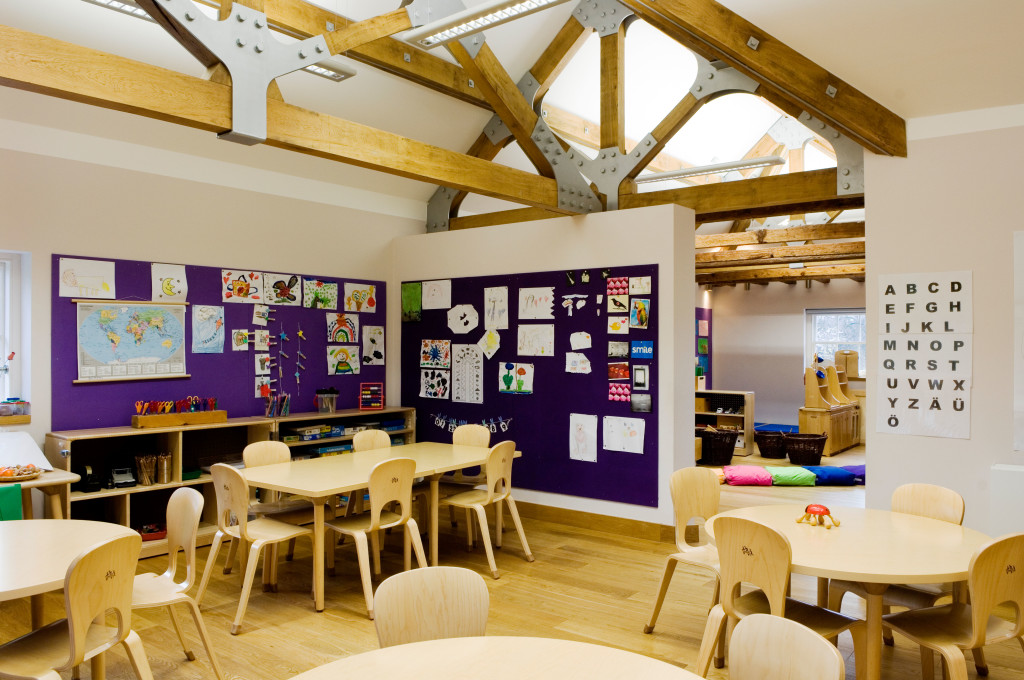
The first thing I noticed when I walked in to observe was that she did her entire session at a long wooden table, sitting side-by-side with her student. After watching for about ten minutes, I asked if we could change the seating arrangement. We moved her student to the end of the table, then had the therapist sit next to her, but on the perpendicular side. This way, eye contact was much easier as they were able to face each other. The student’s eye contact improved instantly with a small environmental change. (Of course, once we made the environmental change, we worked together to address other changes that could be made to encourage eye contact.)
Environmental changes can be a quick and simple solution to some problem behaviors. Here are some questions to consider in order to alter the environment effectively:
Is it possible that a change in furnishings could change the behavior? For example, moving a child’s locker closer to the classroom door may decrease tardiness, putting a child’s desk in the furthest corner from the door may decrease opportunities for elopement, or giving your child a shorter chair that allows them to put their feet on the ground may decrease the amount of times they kick their sibling from across the table. You may also want to consider partitions that allow for personal space, clearly-marked spaces for organizing materials, proximity to students and distractions (such as windows or the hallway).
Can you add something to the environment to change the behavior? For example, your student may be able to focus better on independent work if you provide noise-cancelling headphones, line up correctly if a square for him/her to stand is taped to the floor, or your child may be more efficient with completing chores if they’re allowed to listen to their favorite music while doing so. I’ve also seen some cases in which the teacher wears a microphone that wirelessly links to a student’s headphones, increasing that student’s ability to attend to the teacher’s instruction.
Will decreasing access to materials impact the behavior? For example, removing visuals such as posters and student work may increase your student’s ability to attend or locking materials in a closet when not in use may decrease your student’s ability to destroy or damage materials.
Will increasing access to materials impact the behavior? For example, making a box of pre-sharpened pencils may decrease the behavior of getting up frequently to sharpen pencils. (I recently visited a classroom in which the teacher put pre-sharpened pencils in a straw dispenser on her desk, and each week one student was assigned the job of sharpening pencils at the end of the day).
Whenever you do make changes to the environment, you may want to consider if the changes require fading. For example, if I make a square on the floor out of tape to teach my student where to stand in the line, I will want to fade that out of over time to increase their independence.
A final consideration is that whatever impact you expect the environmental change to have should be clearly defined and measured. Take data to ensure that the intervention is working so you can make adjustments as necessary.
For more detailed information on modifying environments, there is a great article from the Council for Exceptional Children by Caroline A. Guardino and Elizabeth Fullerton entitled “Changing Behaviors by Changing the Classroom Environment.” Click here for the article.
WRITTEN BY SAM BLANCO, MSED, BCBA
Sam is an ABA provider for students ages 3-12 in NYC. Working in education for ten years with students with Autism Spectrum Disorders and other developmental delays, Sam has developed strategies for achieving a multitude of academic, behavior, and social goals. Sam is currently pursuing her PhD in Applied Behavior Analysis at Endicott College.


