

By: Cassie Hauschildt
When a child is diagnosed with autism, there are a number of resources, therapies, and programs recommended to parents. They are told all about ABA, ST, OT, PT, and FT, among others, receiving an alphabet soup of therapies. We explain the importance of early intervention. For parents of older children or teens, they learn how to navigate the school system with BIPs, IEPs, ARDs, and more. They begin to understand the behaviors of their children in a new light, and may even gain a few new fears from behaviors of other children. They learn the proper term for eloping and steps to take to help prevent sensory overload. And while many behaviors are explained, it also becomes obvious that there is not an immediate fix for many of them.
One service that professionals may not tell parents about at the time of diagnosis is their local police department’s registry program for individuals on the Autism Spectrum (along with other disorders or special needs). However, if this is a service is available to them, it could help alleviate many of the concerns that come along with an autism diagnosis. This free and essential service is often not openly advertised to the public, but rather, lives on a corner of their local webpage. Some don’t even have an obvious link on the homepage, requiring citizens to use the search function in order to get their child included on the list. This service can have a variety of names, including but not limited to: “Safe Return Program,” “[Autism and] Special Needs Registry,” “C.A.R.E.S,” and “Voluntary Registry Program for Vulnerable Populations.”
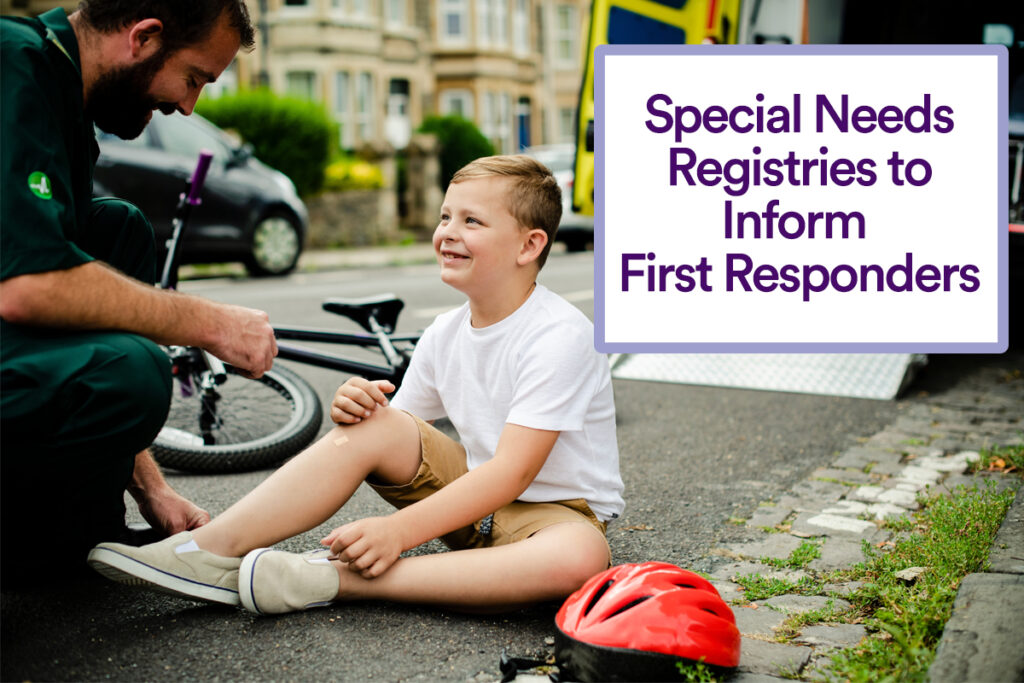
Registering your ASD Child for this program will create a note associated with your home address in the local police’s internal system. This can help participants in multiple ways. First, if there is ever an officer dispatched to your home, they will be alerted that an ASD individual lives in the home and be prepared to accommodate that person’s needs. Additionally, if a child was to elope, many programs have the option to upload a recent photo. This will make it easier for law enforcement to distribute the child’s picture quickly. For some cities, , this information could also be shared with the any firefighters or paramedics sent to the home by the dispatch team.
The method for finding if your local police department offers this program will differ depending on your city. The best start is to try searching “[CITY NAME] Special Needs Registry” on a search engine such as Google. If this doesn’t work, you may have to do some detective work on the local police website. When trying to find this program locally, I had to find the “Community Programs” tab on the menu bar of the police website.
Each program will require different information to register. At a base, caregivers should expect to provide name, address, diagnosis, and physical description of the registrant as well as the contact information for all caregivers. If the registrant is able to drive, information about their primary vehicle will also be required. Any additional required information will vary depending on the local program. Some require a doctor’s letter proving diagnosis, others ask for a recent picture, and other ask for communication methods and support items.
If you find that your local police department doesn’t have a program, consider approaching them about implementing one. With the updated CDC estimate of 1 in 44 children getting diagnosed with autism, it is almost guaranteed that this program will be useful to more than just you. Additionally, these programs can be utilized for individuals with Alzheimer’s, Dementia, Down Syndrome, and many other special needs. BCBAs and Educators are the perfect individuals to partner with police on program parameters. Additionally, it’s a great opportunity to broach your local police department about training for interacting with ASD individuals.
Cassie Hauschildt received her autism diagnosis at 32 years of age and is the mother of an ASD son, who was diagnosed at 20 months old. Since his diagnosis, she has become an advocate for ASD children. She dedicates her time to mentoring parents of ASD kids through the tough first few months post-diagnosis. She also is trying to get rid of the negativity surrounding ABA therapy. She does this through humor, while using real talk, on her TikTok @AnotherAutismMom. She also runs the “Dino and Nuggets Corner” Facebook Group.
The post Special Needs Registries to Inform First Responders appeared first on Different Roads to Learning Blog.


