

By James T. Ellis, PhD, BCBA-D and Christine Almeida, MSEd, EdS, BCBA
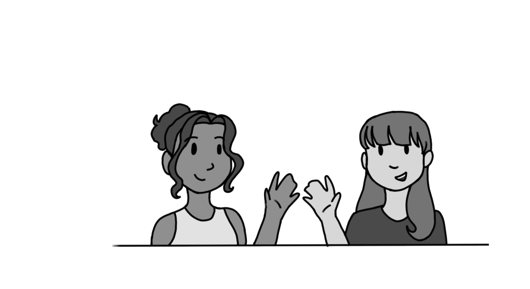
Image by Chessie Almeida
Hi! Hello! Welcome to the Socially Savvy Second Edition!
Almost 20 years ago, we (Christine and Jim) decided to develop a social-skills assessment, which eventually became Socially Savvy. At the time, we were working together as BCBAs with 3- to 5-year-olds in a public preschool program. Thanks to Christine’s creativity and “let’s just do it” attitude, and Jim’s methodical, sometimes perfectionist approach, the project took about five years. Actually, closer to eight—but who’s counting?
With the support and guidance of Julie Azuma and the incredible team at Different Roads to Learning, it all came together. Socially Savvy has always been something we are incredibly proud of.
When we finally finished, we had poured so much time and thought into every detail that our immediate reaction was, “That’s it. Let’s never write anything again.” And yet, here we are—with the second edition of Socially Savvy just published.
So what could have possibly compelled us to take this on again?
Even after completing the first edition, we both found ourselves constantly noticing new ideas—teaching methods, activities, games—and quietly collecting them. We agreed we wouldn’t revisit such a large project unless we truly had meaningful new material. Over time, that material grew: new games (check), a more efficient way of grouping children (check), updated recommendations for books and practical tips for teachers (check).
But none of those alone would have been enough to bring us back to the drawing board.
What truly motivated us was the evolution of the field—particularly its growing embrace of neurodiversity. That shift prompted us to take a deeper, more critical look at our original work. Had it held up? What needed to change?
We felt strongly that Socially Savvy needed to more clearly reflect a neurodiversity-affirming perspective—not just in the language we use when working with autistic individuals, but also in what we target and how we approach teaching. This meant going through the manual line by line—updating approaches, incorporating new strategies, and removing practices that no longer align with feedback from autistic individuals and the broader community. Our goal was for our work to be a partnership, with autistic voices helping to lead the way. We hope this second edition reflects that commitment.
We recently asked a colleague what she was most looking forward to in the new edition—admittedly a big ask, since she hasn’t seen it yet. She generously shared:
“I am really looking forward to the release of the second edition of Socially Savvy. It sounds like this update truly aligns with the direction the field has been moving—especially the emphasis on neurodiversity-affirming supports and more naturalistic, engaging teaching strategies. Tools like visual supports and interactive games can make a big difference in generalization and motivation, particularly in group-based social skills work.”
We’re proud of this second edition, and we hope it delivers on expectations like these. More than anything, we’re excited to hear from you. So many of you have shared feedback and encouragement over the years, and we truly value it. We look forward to hearing your thoughts once again.
About the Authors
James T. Ellis, Ph.D., BCBA-D
James (Jim) Ellis earned his Ph.D. in Clinical Psychology from West Virginia University and
is a licensed psychologist and board-certified behavior analyst. For over 30 years, Dr. Ellis has provided services for children with autism spectrum disorders and their families. In 2008, he helped found the Step by Step School for Children with Autism in Guyana, South America and in 2012, he founded Step by Step Behavioral Solutions, through which he provided consultation and therapeutic support to individuals with autism spectrum disorders and their families. Currently, Dr. Ellis works in a public school, supervising a group of behavior analysts and overseeing programming for autistic students. Dr. Ellis has written articles for professional journals and presented at local, regional, national, and international levels on topics including play intervention, providing effective consultative services, and supporting children’s social skills development.
Christine Almeida, Ms.Ed., Ed.S., BCBA
Christine Almeida earned her M.S.Ed. in Special Education and Ed.S in Behavioral Education from Simmons College in Boston. Ms. Almeida is a practicing board-certified behavior analyst in the Boston area who has worked in both private and public schools. She
currently provides oversight of services for young children with autism spectrum disorders
for a public school. Ms. Almeida has presented workshops at the local, regional, and national levels on the subjects of educational assessment, play intervention, and social skills.
The post Introducing: Socially Savvy Second Edition! appeared first on Different Roads to Learning Blog.


