

By: Rosemarie Griffin, SLP, BCBA, originally posted on ABASpeech.org
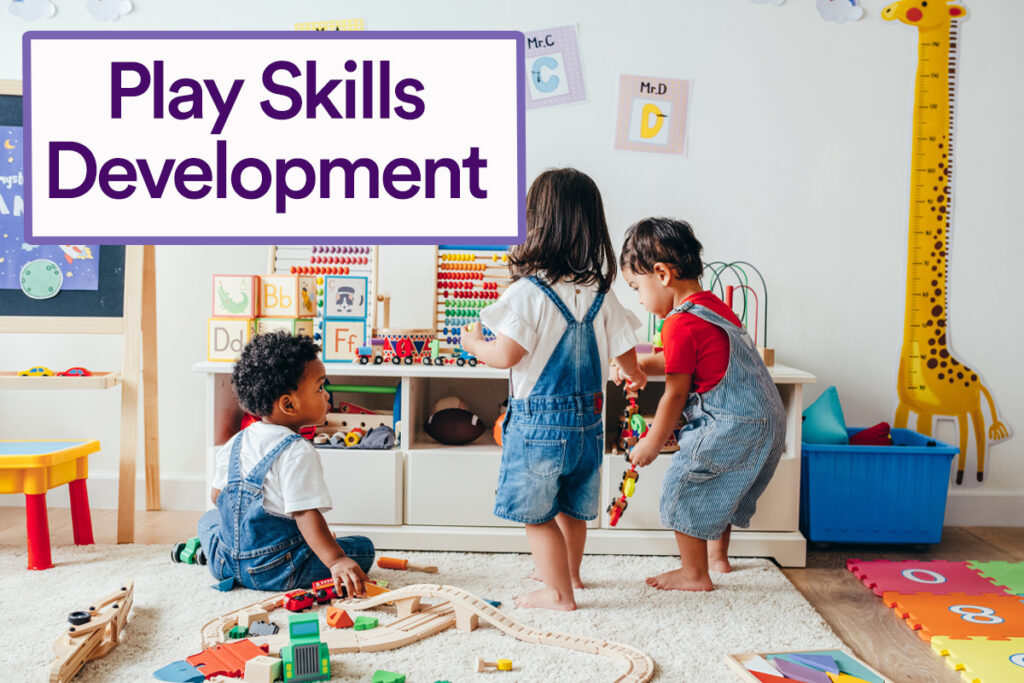
Play is this fascinating tool that allows children to absorb information, learn, engage, socialize, and communicate. Play is vital to children’s development. Play is a natural way to bring children into an exciting new adventure each day. When discussing play skills development, caregivers and providers often need a refresher on what play skills are appropriate for various ages. Play can give children a sense of closeness when playing, build social skills, problem solving skills, and of course learn language. Understanding the stages of play skills development can help with knowing what play is appropriate and when!
Milestones of Play
6-12 months- In this baby stage, play is simple, but so rewarding for the child and parent! Imitation is a huge deal at this age and children love to imitate anyone they are playing with. Think of games like “so big” or simply waving. Playing peek-a-boo is so much fun and a great way to engage in play with little ones. Songs with silly words are wonderful at this age also. Remember communication and play starts well before language, so nonverbal play is hugely important too!
18 months- Here comes the pretend play! Toy kitchens are all the rage for our blooming toddlers because pretend play is blossoming and imaginations are growing. Our toddlers begin to use tools like hammers or spoons to imitate real life actions in their pretend play. Feeding our baby dolls is another big one at this stage! Often this age group engages in solitary play and will build blocks alone or complete a puzzle by themselves. They often don’t even notice if other children are around them!
2 year olds- Now that our children are a bit bigger, they are ready to engage in even more developed pretend play. Now children may imitate household chores like pretending to sweep or wash the dishes. This would be the perfect time to play house and use their world in their pretend world!
Onlooker Play- When children are preschool age, they may begin to watch other children play and this is called onlooker play. Onlooker play is when children watch other children play! During this time, children are building their social and emotional skills and also learning how to engage in situations. They are even learning from other children and boosting attention and memory!
Parallel Play-This is another play development around ages 2-3 when children are playing next to each other, maybe with the same toys, but not engaging with one another. The children influence each other and may even copy each other! Think of this as a precursor to learning how to truly play together!
Associative Play- Between 3-4 children begin to play together by using the same materials and doing similar activities, but they are still a bit independent. Think two children sharing crayons, but drawing sepapare pictures. The children like the company of the others, but aren’t ready to actually make a game together yet.
Cooperative Play- Lastly, between 4-5 children start to interact with one another and play together! They want the interaction and they want to do the activity together. This is where pretend play really takes off and children pretend to be the mom and dad and take care of a baby or serve each other dinner at the pretend restaurant!
Play and Therapy
The most important idea to remember when it comes to play in therapy is that it is all about the mindset. Don’t be afraid to get silly. Loosen up! Make silly faces, use silly sounds, and make those genuine connections. Toys aren’t as important as human connections, so don’t worry about all the toys and just be you! If you are looking for a few toys though, bubbles, balls and markers are great ideas! Puppets can be a ton of fun too! Stay away from anything that needs batteries because that takes the play away from the child. The toy does all the work! The more content that is introduced while playing, the more the child will remember and absorb from you!
When it comes to play skills development, it is so important to understand the age of the child and the impact play will have on them. It is also so important to know what to expect in terms of play from a child at different age groups. Play is such a huge stepping stone in learning, engagement, social skills, and communication. Play skills development is a great topic to delve into if you are a parent or a SLP!
Rosemarie Griffin, SLP, BCBA is dedicated to helping SLPs and other professionals provide systematic language instruction with ease. Working with students with autism and other complex communication disorders can be challenging. Rose has dedicated herself to helping by providing professional development and real life examples of what she does in her daily practice. See her podcast, blog, and collaboration opportunities at www.abaspeech.org
The post Play Skills Development appeared first on Different Roads to Learning Blog.


