

Description
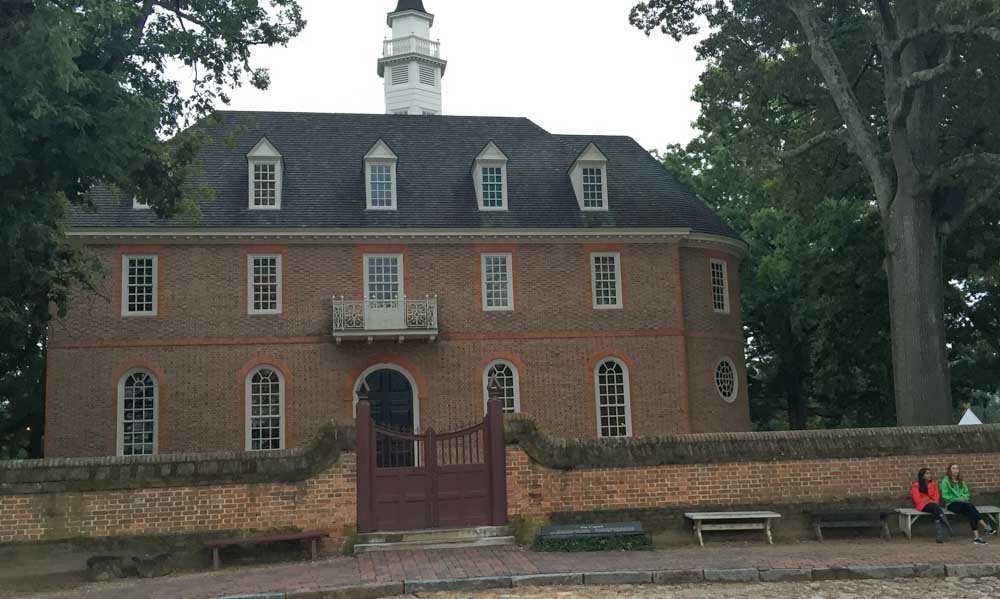
Thanks to everyone who joined us for William & Mary’s summer weekend neurodiversity course. The course was held the same weekend as the Washington DC Pride Parade. There was a lot happening at Dupont Circle!
I was thrilled to see a non speaking autistic person among the attendees. To the best of my knowledge he was the first such person to attend and take part in our neurodiversity programming. At one point, he asked, “When will colleges be ready for students like me?” He was accompanied by an aide (she was beside him in high school class too) and he communicated through a letter board where he spelled out his thoughts, and she verbalized them. That’s a somewhat familiar scenario in high school, but rare in higher education.
I wondered how long it would be (if ever) before technology could take the place of the aide. It seems like a simple process until you watch it happen, and realize the aide does far more than add word spacing and punctuation. She also adds focus, by asking questions and helping clarify thoughts. I can see a machine solving the punctuation puzzle, but machine intelligence has a ways to evolve for the rest.
Replacing that student’s letter board with an ipad would not eliminate his need for assistance in school. And he was 18 – with college potentially a year or so away. I told him about specialized autism programs like the one at Landmark College in Vermont, where they have aides like the one he brought to class, and a wide range of intensive support services. That’s one possibility for college, right now.
The other possibility is to obtain funding for an aide through state disability services, and have an aide accompany him to a more traditional (and more affordable) state college. Unfortunately, the availability of services varies widely across the country.
Digging deeper, I realized the aide is not the only issue. What about housing, and general living supports? A non-speaking person with high support needs cannot simply go off to college like a student without disability. Once again, we have the example of specialized colleges like Landmark who have substantial support abilities, and students can turn to state agencies for help.
This adds up to a substantial restriction on the college options for a non-speaking person. If they are registered with disability services in the state where they live it may be easier to attend school in that state. But what if they want to attend an out of state school? That may be a lot more work to set up. And support funding is by no means assured. Private autism-centered schools like Landmark are an option, but they are few in number and the cost will be prohibitive for many families.
William & Mary is committed to making a campus that’s friendly and welcoming to neurodivergent students, but this was a student we could not accommodate with the college’s resources alone. And I’m sure we are typical of mainstream colleges in this regard. The truth is, we’ve had very few requests for this kind of accommodation up till now, but I am sure they are coming.
How will college admission officers evaluate applications from non-speaking students? The desire of colleges to use a standardized writing-intensive application runs hard up against the desire for neurodiversity accommodation in students like this, whose disability makes it hard to be expressive in writing. We owe it to the students of tomorrow to solve this problem.
We talk about community college as a good path for autistic students who want a gentler transition to college. Most community college students live at home, so that transition is delayed. Community college classes tend to be smaller, and that may be less stressful. Community colleges also tend to be in-state, so accommodation services may be easier to obtain. Admission processes are far easier, and tuitions are low. The transition from community college to a regular college is generally a lot easier than going straight from high school.
Is that – and our existing array of accommodations - enough to accommodate students like the one in this weekend’s class? Time will tell.
John Elder Robison is an autistic adult and advocate for people with neurological differences. He's the author of Look Me in the Eye, Be Different, Raising Cubby, and the forthcoming Switched On. He serves on the Interagency Autism Coordinating Committee of the US Dept of Health and Human Services and many other autism-related boards. He's co-founder of the TCS Auto Program (A school for teens with developmental challenges) and he’s the Neurodiversity Scholar in Residence at the College of William & Mary in Williamsburg, Virginia.
The opinions expressed here are his own. There is no warranty expressed or implied. While reading this essay may give you food for thought, actually printing and eating it may make you sick.

Source: Raising Cubby
Related Feed Entries
Part 1: Why Great Clinicians Can Struggle as Supervisors
by: Cheryl Davis, PhD, BCBA-D, Dana Reinecke, PhD, BCBA-D
Clinical expertise does not automatically translate into supervisory expertise. Supervisors need explicit instruction, modeling, practice, feedback, and ongoing support, just like…
12 days ago · From Different Roads to Learning
Starting April 1, disabled people across England will be able to travel by bus for free at any time of day. Previously, free bus passes were restricted to off-peak hours on weekdays (between 09:30 and 23:00), making it difficult for pass holders to commute to standard morning jobs or attend late-nig…
01.09.2026 · From Assistive Technology Blog
Fallbrook artist Joel Anderson, “The Artist of Smiles,” has his dog portraits on display at TERI Campus of Life in San Marcos through October 2026.
By Debra Muzikar
Last week I had the pleasure to assist Fallbrook artist Joel Anderson in hanging his dog series art outside Teri’s Co…
25.08.2026 · From The Art of Autism
This list is meant as a springboard for discussion and more awareness into the female experience with autism.
By Samantha Craft
Females with Autism: An Unofficial List
Section A: Deep Thinkers
A deep thinker
A prolific writer drawn to poetry
*Highly intelligent
Sees things at multiple levels, incl…
24.08.2026 · From The Art of Autism
The Biology of Breaking
By Jessica Penot
An autistic meltdown is an involuntary loss of behavioral, emotional, and physiological regulation that occurs when an autistic person’s ability to cope with sensory, cognitive, emotional, or environmental demands is exceeded. Unlike a temper tantrum, a meltd…
19.08.2026 · From The Art of Autism
Rate
Info

Recommend

