

Ron Sandison interviews Dr. Paula Kluth, consultant, author, advocate and independent consultant
- What inspired you to study special education in college?
My high school started welcoming students with more complex needs when I was a senior. I approached the teacher to volunteer and work in her classroom and I made my first friends with disabilities. These friends and that teacher really encouraged me to pursue teaching as a profession.
- How did you begin working with students who have autism and other disabilities?
Well, my degree was in special education in significant disabilities, but I started working in an inclusive school right away so I taught students with and without disabilities from my first days as a teacher. The child who really taught me the most that year was a little six-year-old named Jay. He had very few reliable ways to communicate, but he was very smart, energetic, and curious. He really got me “hooked” on learning more about autism (which I knew very little about at the time).
- What life lessons have students with autism taught you?
I have learned so many lessons from my students and my colleagues on the spectrum. Mostly, I have learned that the “absence of evidence is not evidence of absence.” In other words, so many kids I supported did not have adequate supports to communicate or express what they know. Because of this, these students were often seen as incapable or disinterested because of their behaviors and inability to express themselves. I have learned how dangerous these types of assumptions can be.
In my work with folks on the spectrum (or anyone with communication needs), I always assume the person I’m interacting with is competent, capable, and interested in connecting with others even when he or she is not able to show what he or she knows. This is one of the things I focused on as a college professor—how to see beyond some of these limitations or challenges and “teach up”—even when it’s hard to assess what a person knows or understands.
Another lesson I have learned is about love. Care and affection is not always expressed in the same ways by different people. Some folks on the spectrum have shown me support and appreciation with deeds or kind notes or just their proximity. This is also true of people without identified needs. Just because someone doesn’t hug you or kiss you or cuddle, it doesn’t mean their feelings for you are not strong, true, or heartfelt.
- What practical advice would you give to parents whose child has autism?
Advice from books and websites and other families will be helpful but, listen to your own instincts too. You know your child and nothing is more important than that. A mom once tearfully told me (about teaching with special interests), “I wanted to use trains to teach my son, but a therapist told me not to encourage his obsession, so I didn’t.” This broke my heart because her instinct was to work with her child’s interest, but this professional made her feel like her instinct was wrong.
I have also found the words and experiences of folks on the spectrum to be invaluable – read autobiographies, attend talks by folks on the spectrum, read their blogs, etc. You will find understanding and insights there.
- What advice would you give to a new teacher working with students who have autism?
–Work with families. Listen to them. Visit their homes. Write goals and objectives with them. Ask their ideas. Learn from them. Collaborate.
–Learn from your student. If he or she can talk or write, ask him or her to share ideas about teaching and learning with you (e.g., favorite types of lessons, favorite materials, special interests). If he or she cannot communicate, learn by observation and interacting.
–Remember that every student is different. Just because you know one person on the spectrum, it doesn’t mean you know about autism. Approach each student as an individual.
- How can parents and teachers use special interests like my prairie dog and honey badger to teach children?
There are so many ways to use special interests in teaching! I wrote an entire book about this called “Just Give Him the Whale” because I had so many ideas. I have also done a little vlog post about it on You Tube.
I will share just a few ideas because the sky is really the limit when it comes to using special interests in the classroom.
- You can use fascinations in any literacy lesson. Let students read about their interest and teach different genres or styles by asking learners to choose different types of texts (e.g., “You can choose a book about whales again, but let’s look for poems about whales this time.”). You can do the same in writing. Let students write about a favorite topic repeatedly but, remind them they must meet assignment requirements (e.g., “Ron, you can choose prairie dogs again, but remember this isn’t a fictional story, you have to write a demonstration speech. Maybe you can write about how to care for a prairie dog.”).
- Use the special interest to connect the student socially. A student who loves Star Wars might join the film club. A student who is fascinated with cameras might want to join the yearbook staff.
- Make your classroom a tribute to student interests. If you have a kindergarten student who loves cats, you might collect some dollar store “kittens” and let any learner cuddle with one during the read aloud. If you have an older student who loves maps, consider adding one to your wall; an English teacher could have a map of famous authors and a science teacher might have a map of fault lines posted.
- Another use of “loves” in the classroom is to create opportunities for students to shine and dive deeper as experts. All students have topics of interest so give them all time to learn more via project-based instruction, “genius hour” activities, or independent research. This way, students have structed ways to learn about topics of interest and teachers have opportunities to teach writing competencies, tools of research, and presentation skills.
- Use a favorite to develop classroom materials the student will find irresistible, but also useful in learning, studying, or engaging in classroom activities. Something as simple as Micky Mouse pencils and paper, might motivate a young Disney-loving writer. A James Bond fan might love to use a briefcase to organize his homework and supplies. A game show fan might be more comfortable giving a speech in front of the room if he or she has a toy microphone for support.
- During your educational career, what are some of the most unique and cool special interests you seen in students with autism?
There are so many—I have had students who loved everything from ceiling fans to cooking shows to construction cones! One of my favorites was a woman I knew who loved manhole covers; she made me really think about them in a different way. I began to see them as mysterious and even as beautiful. That’s what I love about peoples’ passions; if you pay attention to what people like, you will learn something new and maybe even see the world differently.
- In your career as an educator what has been some of the greatest challenges?
Getting old systems to change more quickly is a challenge. Sometimes, individual teachers are ready to accept a wider range of learners into their spaces, but the district is set up to educate students in separate places. It’s not just a matter of changing hearts and minds, but of tacking funding formulas and norms and using space differently, etc.
Another challenge is fear of the unknown; educators might be reluctant to support students with disabilities because they don’t know much about disability or difference and they believe they need a range of special skills to teach a child with identified needs. Once they have had some experience, they usually feel much less fearful and much more confident.
This is why I am excited to see what the next generation of teachers looks like—many of them will have worshipped with, been raised with, played with, and been educated with children on the spectrum. The fears of the previous generation of teachers will not exist in the same way. I think that will make a big difference in how kids are supported and understood.
- What are some of the greatest blessings working with students with autism?
I think teaching and supporting diverse groups of students makes schools more welcoming, in general. When I am with any diverse group, I find my awareness expands and my perspective broadens. This has certainly been true of working with students with autism.
In addition, I have found that learning about special interests has enriched my life. I have learned so much about learning itself and about countless topics. I have even become more of an train-lover which is cool because my dad worked on the Green Bay & Western Railroad for 16 years and trains were a big part of my childhood.
- How can schools and churches promote inclusion for children with autism and other disabilities?
There are so many ways, but I always say start by just setting your intention and making it known to all “We want to be more inclusive.”
Also:
- set inclusion-related goals “We want to do an all-school or all-church book club on a book related to inclusion/autism”
- elicit ideas from students and their families
- understand inclusion as a process—if your idea doesn’t work at first, go back to the drawing board
- create spaces that work well for all (e.g., quiet spaces that ANY student or parishioner can access when needed)
- help people find community (e.g., clubs/gatherings)
- bring folks with disabilities in as guest speakers to educate the group
- ask others who have been successful to help you
- What are some topics you are currently researching? What will your next book be about?
Lately, I have been writing and researching a lot about Universal Design of Learning (UDL) in schools. UDL is concerned with how to create lessons that work well for all students “off the bat” so that we don’t always need to go back and tweak it for one or more students who may learn differently. So, in a UDL lesson, students might have choices of materials to use; if writing with a pencil is too challenging, students might use a tablet or computer. Another example of UDL is presenting content in a variety of ways. So, instead of everyone having to learn a concept primarily from working problems in a textbook, students can access supports like video lessons on Kahn Academy or practice that concept on an app.
I just finished a book on that last year and now I’m exploring one aspect of UDL in particular which is engagement and active learning. My next book may be about incorporating more movement and exercise into daily instruction.
- You love to read, what are some of your personal favorite books on autism?
Now you have asked a really tough question! The list is long, but it absolutely is full of autobiographies and texts written by folks on the spectrum. I am going to end up leaving a lot of favorites out, but to name just a few:
- Beyond the Wall by Stephen Shore
- Pretending to be Normal by Lianne Holliday Willey
- Carley’s Voice by Arthur & Carley Fleishmann
- Freaks, Geeks and Asperger Syndrome by Luke Jackson
- Life Behind Glass by Wendy Lawson
- Mozart & the Whale by Jerry and Mary Newport
- Autism From the Inside Out by Donna Williams
And now….
- A Parent’s Guide to Autism by Ron Sandison, which I bought after meeting you and am really enjoying!
- As an advocate and international speaker, what places do you like to travel best and why?
Well, it sounds odd, but my favorite place to “travel” is just a few miles north of Chicago. I love going back to my home state of Wisconsin to work—I love everything about it including my favorite sports teams- the Green Bay Packers and the Milwaukee Brewers (two of my special interest areas).
I also love working in Australia because it is beautiful and also because my sister just happens to live there!
***
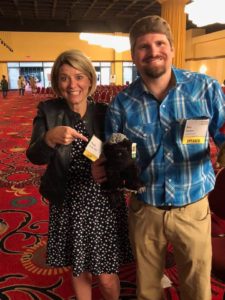
Dr. Paula Kluth is a consultant, author, advocate, and independent scholar who works with teachers and families to provide inclusive opportunities for students with disabilities and to create more responsive and engaging schooling experiences for all learners. Paula is a former special educator who has served as a classroom teacher and inclusion facilitator. Her professional interests include differentiating instruction and inclusive schooling. She is the author or co-author of more than 15 books.
Website: https://www.paulakluth.com/about-paula/
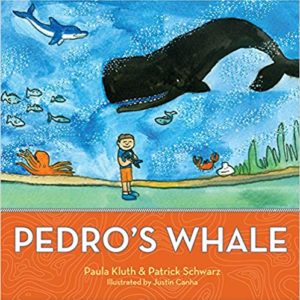
Amazon Link to her best-seller Pedro’s Whale.
Editor’s Note: Pedro’s Whale was illustrated by autistic artist Justin Canha.
***
Ron Sandison works full time in the medical field and is a professor of theology at Destiny School of Ministry. He is a Board Member with The Art of Autism and an advisory board member of Autism Society Faith Initiative of Autism Society of America. Sandison has a Master of Divinity from Oral Roberts University and is the author of A Parent’s Guide to Autism: Practical Advice. Biblical Wisdom published by Charisma House. He has memorized over 10,000 Scriptures including 22 complete books of the New Testament and over 5,000 quotes.
He frequently guest speaks at colleges, conferences, autism centers, and churches. Ron and his wife, Kristen, reside in Rochester Hills, MI, with a baby daughter, Makayla Marie born on March 20, 2016. You can contact Ron on his website spectruminclusion.com or email Ron at Sandison456@hotmail.com.


