

Kenyan entrepreneur Elly Savatia has won the prestigious Africa Prize for Engineering Innovation and £50,000 for creating Terp 360, a revolutionary web-based application that translates speech and text into sign language using AI-powered 3D avatars. Described as “Google Translate for sign language,” the app addresses a critical challenge faced by deaf communities across Africa: the severe shortage of human sign language interpreters. In Kenya, deaf individuals often struggle to access essential services like healthcare, education, and employment because most service providers don’t know sign language, and human interpreters are both expensive and scarce. Savatia’s inspiration came from witnessing this disparity firsthand during a robotics class in Northern Kenya, where 300 deaf students shared just one interpreter. What began as a simple Unity-based app has evolved into a sophisticated platform using motion capture technology, developed in collaboration with deaf and hard-of-hearing Kenyans who recorded over 2,300 signs to ensure the avatars move with lifelike fluidity rather than robotic stiffness.
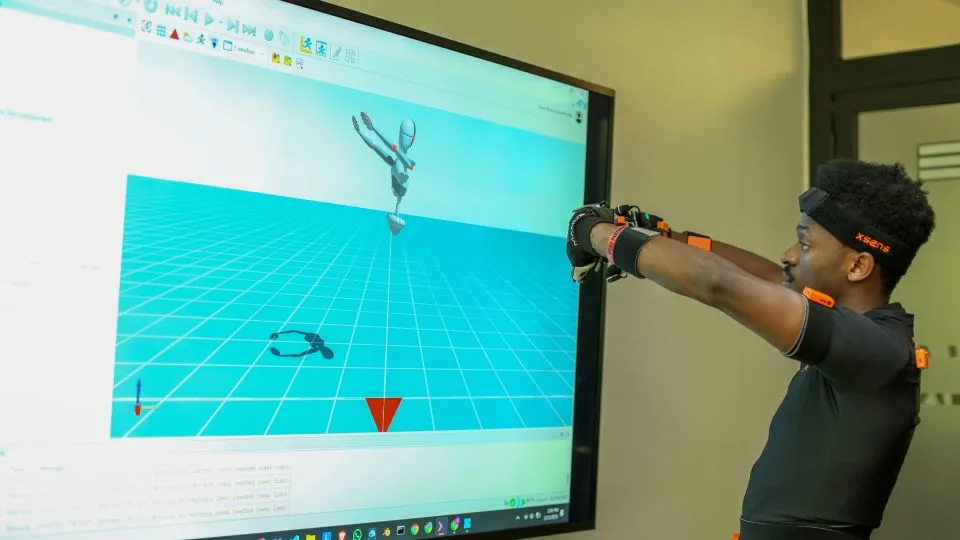
The innovation stands out for its focus on African sign languages and cultural contexts—an area largely overlooked by existing global solutions. Currently supporting English and Swahili translations into Kenyan Sign Language, Terp 360 has already interacted with over 2,000 members of the deaf community during its testing phase. Savatia and his team at Signvrse are now preparing to expand into the B2B market, targeting education, corporate, and healthcare sectors where the need is most acute. With a motion capture studio in Nairobi capable of recording 1,000 new words daily, the team is partnering with local NGOs and news stations to access visual sign language datasets. Plans are underway to support Rwandan, Ugandan, South African, British, and American sign languages by mid-2027, with visions of incorporating broader vocabulary, dialects, and colloquialisms to create truly inclusive communication tools across multiple sectors.
The Critical Role of Assistive Technology in the Global South
Applications like Terp 360 are particularly transformative in the global south, where access to assistive technology can be as low as 3% of the actual need in low- and middle-income countries. According to a joint WHO-UNICEF report, more than 2.5 billion people need assistive products, yet nearly one billion are denied access, particularly in developing nations. The challenges are especially acute for deaf communities: the World Health Organization and World Federation of the Deaf estimate that between 70 million and 200 million deaf people worldwide lack access to education, with at least 90% of deaf people in developing countries never attending school. Many deaf people in Africa face overwhelming barriers to education, employment, healthcare, political participation, and social and family life.
Research shows that in Southern African countries like Botswana and Swaziland, 44% and 67% respectively of people who need assistive technology do not receive it. The majority of the global population of people with disabilities live in the global south, where their lived realities differ drastically from those in developed nations, and deaf education in many African nations has not reached the level that allows deaf and hearing persons to compete for the same job opportunities. By developing technology specifically designed for African sign languages rather than simply adapting Western solutions, innovations like Terp 360 demonstrate how locally-driven innovation can more effectively serve underserved communities while respecting linguistic and cultural diversity. As governments across Africa implement disability inclusion policies—like Kenya’s requirement that 5% of jobs be reserved for people with disabilities—tools like Terp 360 provide the practical infrastructure needed to make these policies meaningful, enabling companies to integrate deaf employees effectively and at scale while creating economic opportunities and fostering greater social equity across the continent.
Source: Yahoo News, Royal Academy of Engineering
AI Disclosure: This blog post was created with the assistance of Claude, an AI assistant by Anthropic. The content was synthesized from provided source materials about Terp 360, with AI conducting research to find and cite credible sources supporting claims about assistive technology access in the global south. Is this a good use of AI? Why or why not? Let us know in the comments below!
The post Bridging the Communication Gap: How Terp 360 is Revolutionizing Sign Language Translation in Africa appeared first on Assistive Technology Blog.


