

Description
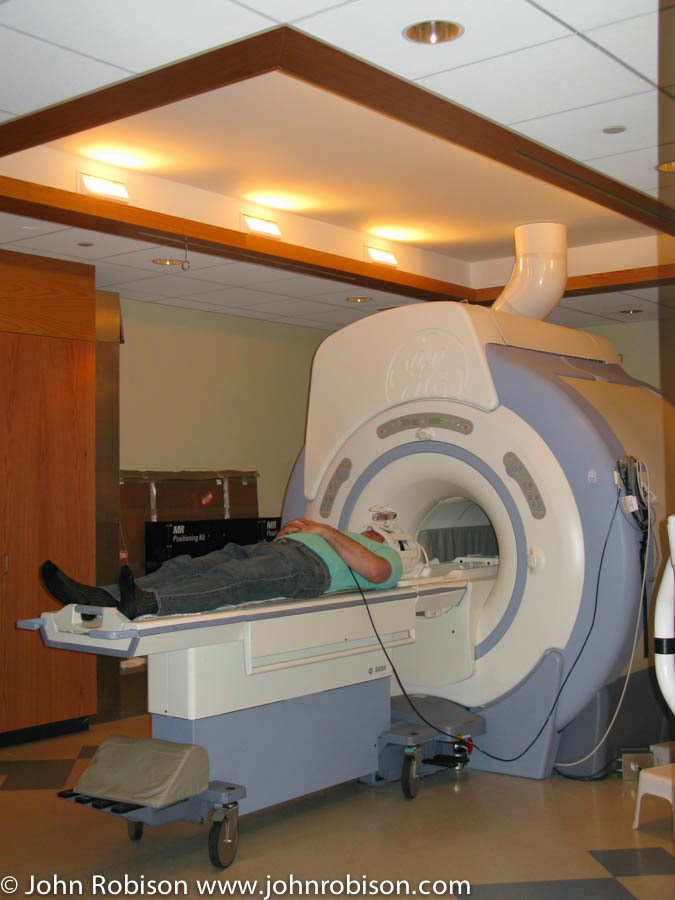
A short while ago I was asked my opinion about a promising new treatment for depression being evaluated at a prominent research hospital. I looked at the description on the hospital’s website, and it did indeed look interesting. I called the study coordinator for more details.
He told me the therapy involved adding energy to parts of the brain that might be involved in depression, and evaluating the results over a period of several months. After my experience with TMS (which adds magnetic energy to the brain) I felt the idea sounded promising enough to be worth exploration.
Patients who enrolled in the study would go to the hospital twice a week for the duration of the study, which would be 2-3 months. Then we got to the “fine print.” Half the participants would get the therapy, and half would get a placebo (a treatment that does nothing.) Hearing that, I asked if the people in the placebo group would have the option to come back after the study sessions, and get the real treatment.
“No,” he said, “we don’t have funding for that.” Wrong answer, I thought to myself.
When scientists construct a study that tests a new therapy for depressed people, they have an ethical duty to their subjects, and the structure of this study falls far short of what I’d find acceptable, as an ethical advisor. I was surprised it made it past the hospital’s review board. I was tempted to raise the question with them, but I didn’t.
If you’re testing a therapy that might help gifted kids read faster, this design might have been ethically ok, because volunteers in such a study would not be described as “suffering.” People who enroll in a depression study are certainly suffering. Asking a population that lives in pain to volunteer for research while withholding possible pain relief from half of them is morally wrong. Period. There’s not much room for discussion about that, in my opinion.
We’ve gone down this road with autism pharmaceutical studies, where policies have evolved to the point where people who get a benefit from experimental medications can continue to take them after the study is complete.
Anyone who signs up for a study like this does so in hopes of gaining a benefit. They don’t sign up to be “control patients” who get a sham treatment for purposes of comparison. No one would knowingly do that.
“We thought they’d sign up to get the money,” the study coordinator told me in a weak voice. Two hundred dollars for eighteen sessions, each of which takes 3-4 hours out of your day? Let’s get real. That’s two bucks an hour; an inducement that I found insulting at the suggestion.
“We had a really strong placebo response,” he told me, in a further effort to justify the flawed study design. I’m aware of that effect, and it wasn’t surprising to hear him say that. Basically, what he was saying was that patients who received a sham treatment reported almost as much benefits as patients who got the “real thing,” and the researchers wanted to separate people who truly got better from those who just imagined they were better.
That’s a real and valid concern in medical research where the power of positive thinking can make people think they are better even when they didn’t receive any medical value from a treatment. We often see placebo responses that are similar to the real thing. So how should researchers tell them apart?
One good way – in a psychiatric treatment like this – is to double the length of the study and give each subject both therapies. The subjects can be told they will be tested with two possible treatments, one of which is a placebo. Half the group gets placebo first, half gets the actual treatment first. Each group gets the other treatment after an appropriate “cooling off” period. That way, the placebo effect can be compared in the same individuals.
The alternative would be to offer the actual therapy to the placebo patients after the study has run, and after announcing they were in the placebo group. That would be ethically incorrect if it came as a surprise, but it would be OK if people were told they might be in a placebo group at the outset.
“Those are good ideas,” the coordinator told me, “But we didn’t have money to do what you suggest.” How does one answer that? Is it better to run an ethically flawed study in hopes of a strong result? Or is it better to hold off until an ethically sound study can be funded? Now we have a different ethical question – one of benefiting the few versus benefiting the many.
The design of this study did not have the potential to harm participants directly but it could increase suffering for those who discovered they were in the placebo group. It certainly subjects half the study participants to hardship for no real benefit. Is it OK to do that to twenty people in hopes of developing a beneficial therapy for thousands?
I think the answer is no, when we place the study in context. This is a well-funded research hospital, and when we consider the costs to save the twenty initial subjects from possible pain, that cost is trivial in the broader scheme of things. The study should be properly designed and funded, or not done at all. Getting funding is the researcher’s job. You don’t save money at the expense of your subjects, unless there is no possible alternative, and a huge comparative benefit.
This study is not a “one or many” example where one person is sacrificed to avoid the sure death of a thousand. That’s the stuff of action movies, not medical science. This is considerably more pedestrian but still important to the patients who trudge to the hospital for three months, and get nothing for their depression but a thanks for helping science.
The final argument - That's the way we've always done these studies - is just disappointing. Two hundred years ago, unsuspecting animals and sometimes people were dissected while alive, in the name of what was then legitimate science. Ever hear of "Anti-vivisection societies?" That was what got them going. Ethics evolve, and this is an example where evolution is called for today.
The final argument - That's the way we've always done these studies - is just disappointing. Two hundred years ago, unsuspecting animals and sometimes people were dissected while alive, in the name of what was then legitimate science. Ever hear of "Anti-vivisection societies?" That was what got them going. Ethics evolve, and this is an example where evolution is called for today.
As someone who has served on several medical research ethics boards I found it troubling that a major hospital would design a study with such obvious (to me, at least) ethical flaws. What do you think? Am I missing something here?
John Elder Robison is an autistic adult and advocate for people with neurological differences. He's the author of Look Me in the Eye, Be Different, Raising Cubby, and the forthcoming Switched On. He serves on the Interagency Autism Coordinating Committee of the US Dept of Health and Human Services and many other autism-related boards. He's co-founder of the TCS Auto Program (A school for teens with developmental challenges) and he’s Neurodiversity Scholar in Residence at the College of William & Mary. The opinions expressed here are his own.

Source: Raising Cubby
Related Feed Entries
Part 1: Why Great Clinicians Can Struggle as Supervisors
by: Cheryl Davis, PhD, BCBA-D, Dana Reinecke, PhD, BCBA-D
Clinical expertise does not automatically translate into supervisory expertise. Supervisors need explicit instruction, modeling, practice, feedback, and ongoing support, just like…
3 days ago · From Different Roads to Learning
Starting April 1, disabled people across England will be able to travel by bus for free at any time of day. Previously, free bus passes were restricted to off-peak hours on weekdays (between 09:30 and 23:00), making it difficult for pass holders to commute to standard morning jobs or attend late-nig…
01.09.2026 · From Assistive Technology Blog
Fallbrook artist Joel Anderson, “The Artist of Smiles,” has his dog portraits on display at TERI Campus of Life in San Marcos through October 2026.
By Debra Muzikar
Last week I had the pleasure to assist Fallbrook artist Joel Anderson in hanging his dog series art outside Teri’s Co…
25.08.2026 · From The Art of Autism
This list is meant as a springboard for discussion and more awareness into the female experience with autism.
By Samantha Craft
Females with Autism: An Unofficial List
Section A: Deep Thinkers
A deep thinker
A prolific writer drawn to poetry
*Highly intelligent
Sees things at multiple levels, incl…
24.08.2026 · From The Art of Autism
The Biology of Breaking
By Jessica Penot
An autistic meltdown is an involuntary loss of behavioral, emotional, and physiological regulation that occurs when an autistic person’s ability to cope with sensory, cognitive, emotional, or environmental demands is exceeded. Unlike a temper tantrum, a meltd…
19.08.2026 · From The Art of Autism
Rate
Info

Recommend

