

By Anika Hoybjerg, PhD, EdS, BCBA-D, LBA and Casey Barron, BCBA, LBA
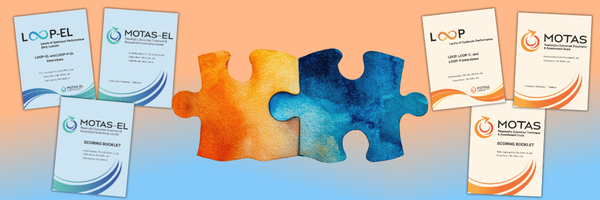
We’ve previously shared a blog about how to work with insurance companies and advocate for medical necessity in ABA. Here, let’s take a closer look at how you can work with insurance companies when using our newest assessment, the MOTAS and the MOTAS-EL.
For many clinicians working in Applied Behavior Analysis, submitting treatment plans and reporting client progress is a large part of the job. Navigating insurance requirements and aligning goals with the criteria set by payors can be a daunting task. With the Meaningful Outcomes Treatment and Assessment Scale (MOTAS) and the Meaningful Outcomes Treatment and Assessment Scale – Early Learner (MOTAS-EL) being newer assessments, many practitioners are asking about the approval of utilizing these assessments in submitting treatment plans to insurance companies. Up to this point, the MOTAS has been submitted to several insurance companies and treatment plans have been approved.
While we cannot guarantee that insurance will accept a particular assessment, several different strategies have been used to gain approval, including understanding medical necessity, providing justification for treatment, aligning goals with the DSM-5 criteria for autism, and pairing the MOTAS and MOTAS-EL with other ABA assessments.
Understanding “Medical Necessity” and Core Characteristics
In many cases, insurance companies approve treatment plans based on whether they are deemed “medically necessary” and if the goals selected relate to the core deficits of autism, as described in the Diagnostic and Statistical Manual of Mental Disorders (DSM-5). The MOTAS and MOTAS-EL were intentionally designed to align with these core characteristics, making them excellent tools for establishing medical necessity in treatment plans. The entirety of the DSM-5 criteria for Autism Spectrum Disorder (ASD) has been printed, with special permission from the American Psychiatric Association (APA), in the MOTAS and MOTAS-EL. This allows practitioners to be familiar with the characteristics of autism and align treatment goals to address the needs of their clients.
Pairing MOTAS and MOTAS-EL with Other ABA Assessments
Because the MOTAS and MOTAS-EL are still gaining recognition, pairing them with assessments used in ABA practice and already accepted by insurance companies may be a practical strategy. Some commonly approved assessments include:
- VB-MAPP (Verbal Behavior Milestones Assessment and Placement Program)
- ABLLS-R (Assessment of Basic Language and Learning Skills-Revised)
- AFLS (Assessment of Functional Living Skills)
- EFL (Essentials for Living)
- Vineland Adaptive Behavior Scales
- PEAK Relational Training System
A clinician may complete one of these more commonly recognized assessments, and select 1-3 domains from the MOTAS/MOTAS-EL to supplement these goals, and only score the applicable domains and subdomains. Alternatively, the clinician may find the MOTAS/MOTAS-EL goals are more appropriate for their learner and complete several MOTAS/MOTAS-EL domains and largely feature MOTAS/MOTAS-EL goals in their treatment plan, but also complete an assessment grid for a more commonly recognized assessment. These techniques have been successful when submitting to payors.
Payors may also request a rationale or justification for using the MOTAS/MOTAS-EL as the skills assessment. Highlighting features of the MOTAS/MOTAS-EL that align with medical necessity and the core characteristics will help individuals unfamiliar with the assessments learn how they can be useful. Some of these features include skill domains relevant to the core characteristics of autism (including social behavior, perspective taking, relationships, transitions, and communication), scoring that tracks progress across multiple environments to evaluate for generalization and maintenance, and an accompanying interview for caregivers to help guide treatment and ensure they are part of treatment from the onset of services and continually throughout.
By incorporating the MOTAS/MOTAS-EL alongside one or more of these assessments used in ABA, practitioners can highlight how the MOTAS/MOTAS-EL address gaps in traditional assessments, particularly in Self-Awareness, Relationships, Perspective Taking, and Flexibility—areas that are crucial for meaningful skill acquisition and which directly address core characteristics of autism in ways that are medically necessary.
Writing a Strong Treatment Plan Using the MOTAS/MOTAS-EL for Insurance Approval
Here is a summary of things to consider when writing a treatment plan using the MOTAS/MOTAS-EL when submitting to an insurance company.
- Identify the Core Deficits: Use the MOTAS/MOTAS-EL to link goals directly to the DSM-5 criteria for ASD. Clearly state how each goal addresses deficits in social communication (expressive and receptive communication, social communication and interactions) , restrictive and repetitive behaviors (including rigidity in routines), or adaptive functioning.
- Include Results for Selected Domains: Present MOTAS/MOTAS-EL results and if necessary, do them alongside other assessments that the insurance company will recognize to strengthen the case for medical necessity.
- Describe Functional Impact: Demonstrate how the proposed interventions will decrease interfering behaviors and improve daily living, social participation, and overall independence.
- Use Objective Data: Since the MOTAS/MOTAS-EL both feature a consistent 0-5 rating scale, this data-driven approach can illustrate progress and justify continued treatment.
- Align Goals with Insurance Terminology: Use language that directly ties the need for treatment to medical necessity, emphasizing how therapy will address impairments that limit functioning in home, school, or community settings.
Further Reading
Learn more about the MOTAS:
- Introducing the Meaningful Outcomes Treatment and Assessment Scale
- Using the MOTAS and LOOP: Selecting Meaningful Goals
- Why the MOTAS Was Created
About the Authors
Anika Hoybjerg, PhD, EdS, BCBA-D, LBA
Dr. Hoybjerg is the CEO, founder, and owner of Autism & Behavioral Intervention (ABI) (a clinic-based ABA center in Draper, UT), ABA Education Center, and Integrity Billing. In addition to founding and leading these companies, Anika has worked in public schools and in private sectors with children and families for over 20 years. Anika is a Doctoral level Board Certified Behavior Analyst (BCBA-D) and a Licensed School Psychologist. Anika has a Bachelor’s degree in Human Development, a Master’s Degree in Curriculum and Instruction with an Emphasis in Autism, a Master’s degree in Human Exceptionality, an Ed.S in School Psychology, and a Ph.D. in Applied Behavior Analysis. Anika is currently pursuing a Master’s degree in Neuroscience and Trauma. Anika has presented at regional, national, and international conferences on a variety of topics relating to kindness in ABA services, autism, collaboration, and assessments.
Casey Barron, BCBA, LBA
Casey is a practicing Board Certified Behavior Analyst in Salt Lake City, Utah. She has been working in ABA since early 2015, spending several years first working as an RBT then as a BCBA in academic, home, and clinical settings. In addition to her work as a practicing BCBA, Casey works as the clinical director of an ABA center that has supported hundreds of children and where she oversees and trains staff members and future BCBAs. Since becoming a BCBA, Casey has presented at regional and international conferences on case studies from her own clinical practice.
Celia Heyman, PhD, BCBA-D
Dr. Celia Heyman is a lead consultant at FTF Behavioral Consulting where she consults with schools and clinics on the implementation of the Practical Functional Assessment and Skill-Based Treatment. Celia is also a core faculty at Capella University’s graduate Applied Behavior Analysis program. Celia was a guest editor on the special issue covering compassion for the Behavior Analysis in Practice. Celia currently serves on the Development Committee of the B.F. Skinner Foundation and is the Student Activities Chairperson for the World Behavior Analysis Day Alliance. She has presented in national and international conferences on topics addressing interfering behaviors, emerging learning instruction, and supervision.
The post Using the MOTAS and MOTAS-EL with Insurance Companies appeared first on Different Roads to Learning Blog.


