

 Many classroom teachers are required to take data on the behavior of their students. However, this can feel like a daunting task given the many things teachers are trying to do simultaneously throughout the day! PLACHECK is a simple way to measure group behavior for engagement or attention.
PLACHECK is short for Planned Activity Check. Let’s say that Ms. Esterman is using a partner activity for a math lesson for the first time in her fourth grade classroom. She wants to see if the kids remain engaged with the content during the partner activity. Here is how she can implement PLACHECK to collect data on engagement.
 Set a MotivAider for a predetermined interval (learn more about the MotivAider). The partner activity Ms. Esterman has organized will take a total of ten minutes. She decides to set the MotivAider for 2 minute intervals.
- At the start of the lesson, set the MotivAider to run and clip it to your waistband. For Ms. Esterman, the MotivAider will vibrate every two minutes to signal her to observe her students.
- When the MotivAider vibrates, collect tally data. Ms. Esterman feels the MotivAider vibrate, then quickly counts the number of students who are engaged in the partner activity.
- Continue to do this for each interval.
- Graph your data.
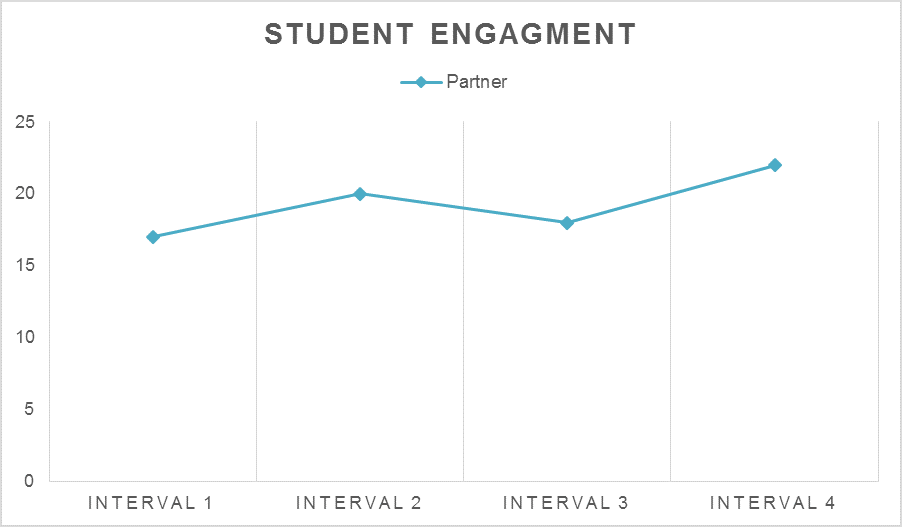
Ms. Esterman’s graph looks like this for her 24 students:
The next day, Ms. Esterman does a similar activity with her students, but uses an independent activity instead of a partner activity. She uses the same 5 steps to use PLACHECK to measure student engagement in the independent activity. Now she can easily compare engagement between the two types of activities. You can see both days graphed below:
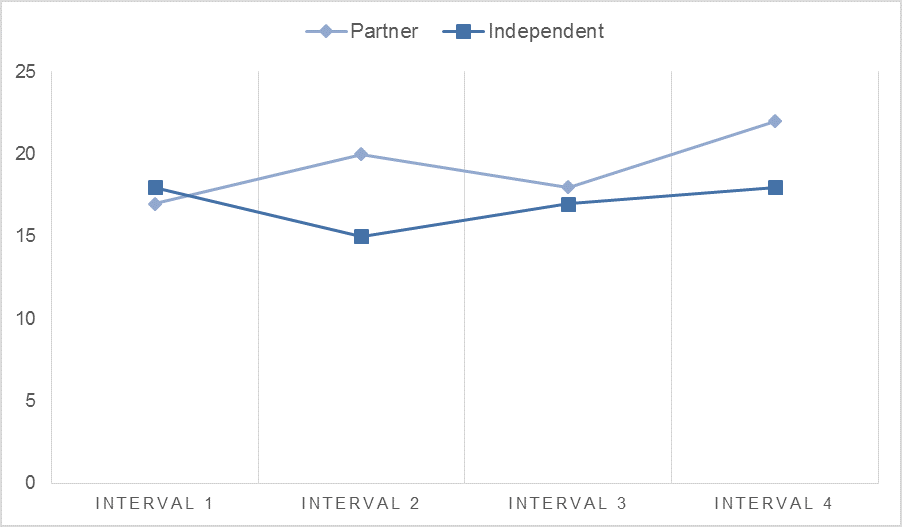
When she compares the two days, she finds these results, and it allows her to make better decisions about what types of activities might work best for the individuals in her classroom. Here, it is clear that between these two activities, her students were more likely to be on task during partner work. However, Ms. Esterman would attain better results by taking more data.
PLACHECK is simple to implement. Ms. Esterman is able to collect this data in less than two minutes each day and can learn a lot from just that brief time.
WRITTEN BY SAM BLANCO, MSED, BCBA
Sam is an ABA provider for students ages 3–12 in NYC. Working in education for ten years with students with Autism Spectrum Disorders and other developmental delays, Sam has developed strategies for achieving a multitude of academic, behavior, and social goals. Sam is currently pursuing her PhD in Applied Behavior Analysis at Endicott College.


