

Description
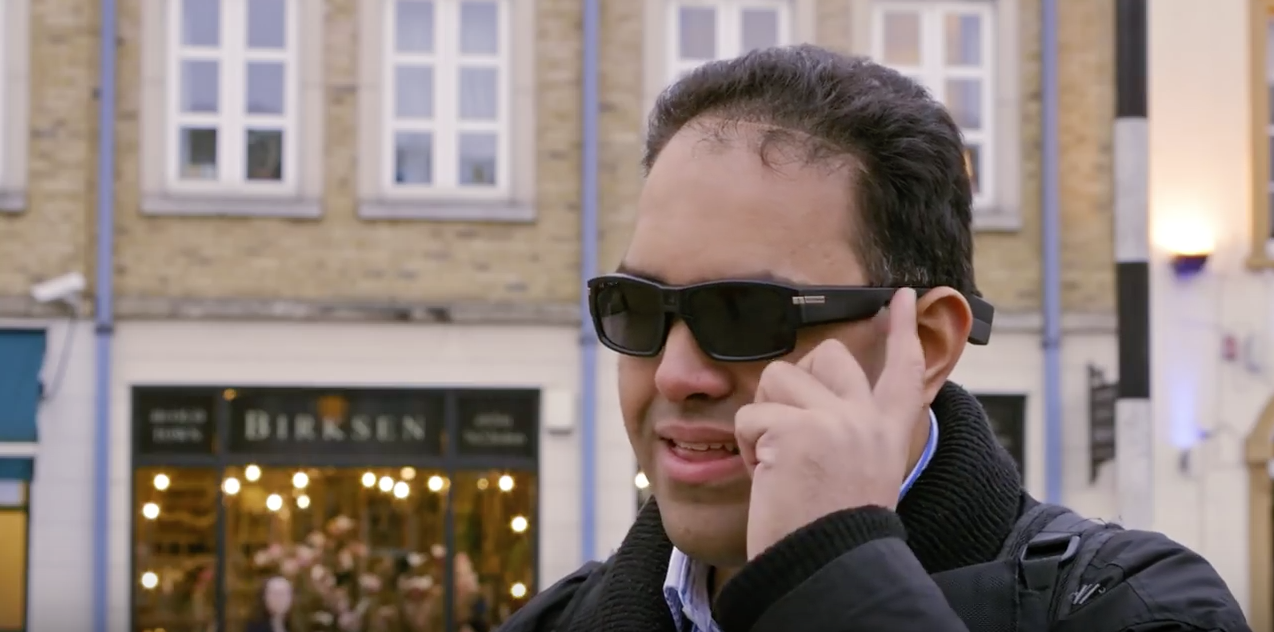
How do blind people know what's going on around them? Are people interested in their conversations? Are they giving them full attention? What sort of activities are people taking part in around them while they are, let's say, sitting on a park bench?
Wouldn't it be nice if there could be a device that could describe the people, their emotions, and behavior around them?
Saqib Shaikh is a Microsoft developer who lost his vision when he was 7. Being a developer and
knowing what technology, especially newer Microsoft technology, can do, is working on a project called Seeing AI that can provide descriptions of surrounding objects and people to a blind person. The project uses Microsoft Cognitive Services, a set of APIs (tools for building software applications) that can allow devices and apps to see, hear, speak, understand emotions and needs via various devices, apps and platforms.
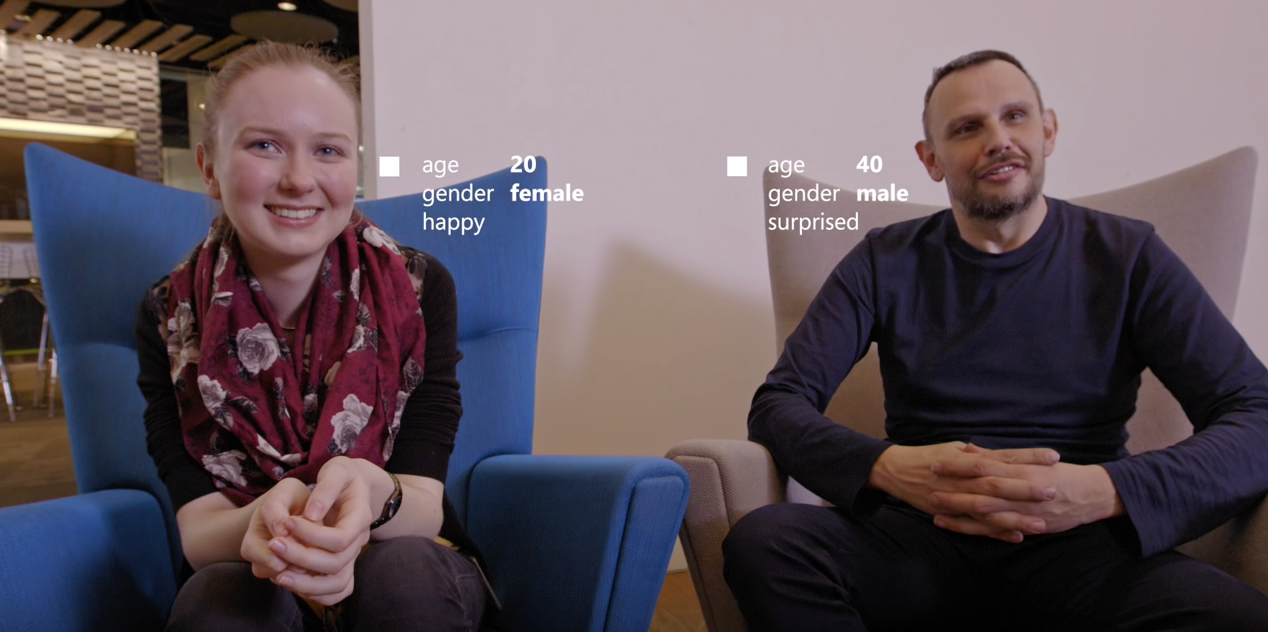 Seeing AI runs as an app on the phone or on Pivothead smart glasses (with an inbuilt camera). The glasses can take photos of people around a blind person and describing exactly what they are doing ("a young man performing a skateboarding trick", " a young girl throwing an orange frisbee"), can tell the age, gender and emotions of people around them ("I see two faces - one is a 40 year old male looking surprised and the other is a 20 year old woman looking happy"), and can also read text from objects. In the video below, Saqib is seen using the phone app to read a menu at a restaurant. Not only does the app guide him on how to angle the camera so the entire menu is in the frame, but also recognizes all the text and starts reading the menu from top to bottom, starting with the appetizers.
Saqib is seen saying that artificial intelligence is improving at a very fast rate, and what we see in Seeing AI is just the beginning. It's exciting to see what's the future has in store for us!
Watch the video to see how Seeing AI works and what all it can do.
Source: Assistive Technology Blog
Related Feed Entries
Part 1: Why Great Clinicians Can Struggle as Supervisors
by: Cheryl Davis, PhD, BCBA-D, Dana Reinecke, PhD, BCBA-D
Clinical expertise does not automatically translate into supervisory expertise. Supervisors need explicit instruction, modeling, practice, feedback, and ongoing support, just like…
13 days ago · From Different Roads to Learning
Starting April 1, disabled people across England will be able to travel by bus for free at any time of day. Previously, free bus passes were restricted to off-peak hours on weekdays (between 09:30 and 23:00), making it difficult for pass holders to commute to standard morning jobs or attend late-nig…
01.09.2026 · From Assistive Technology Blog
Fallbrook artist Joel Anderson, “The Artist of Smiles,” has his dog portraits on display at TERI Campus of Life in San Marcos through October 2026.
By Debra Muzikar
Last week I had the pleasure to assist Fallbrook artist Joel Anderson in hanging his dog series art outside Teri’s Co…
25.08.2026 · From The Art of Autism
This list is meant as a springboard for discussion and more awareness into the female experience with autism.
By Samantha Craft
Females with Autism: An Unofficial List
Section A: Deep Thinkers
A deep thinker
A prolific writer drawn to poetry
*Highly intelligent
Sees things at multiple levels, incl…
24.08.2026 · From The Art of Autism
The Biology of Breaking
By Jessica Penot
An autistic meltdown is an involuntary loss of behavioral, emotional, and physiological regulation that occurs when an autistic person’s ability to cope with sensory, cognitive, emotional, or environmental demands is exceeded. Unlike a temper tantrum, a meltd…
19.08.2026 · From The Art of Autism
Rate
Info

Recommend

