

ReBokeh, an assistive technology startup, has partnered with Johns Hopkins University’s Disability Health Research Center (JHDHRC) to create Low Vision Connect, a digital community platform. The collaboration between ReBokeh and JHDHRC aims to improve the lives of individuals with low vision by facilitating authentic connections based on personal experiences. The platform is intended to address social isolation within the low-vision community and provide a space for people to share their lived experiences, find support, and build lasting relationships.
The platform’s focus is on individuals with moderate- or low-vision impairment, a group that often falls into an ambiguous middle category between those who require glasses or corrective surgery for improved vision and those who are blind or nearly blind. Dr. Bonnie Swenor, the director of JHDHRC, highlighted the importance of human connection for mental and emotional health and expressed excitement about partnering with ReBokeh to create a much-needed space for those with low vision.
Currently in the early stages of development, Low Vision Connect is expected to launch in about a year. The demand for such a platform is high within low-vision and disability-focused communities, as people seek ways to connect with others who truly understand their challenges. User testing is planned to begin in the early months of the following year to gather feedback and improve the platform’s effectiveness in addressing the needs of the low-vision community.
ReBokeh has also created an app with the same name. This app allows people with moderate vision impairment to create custom filters unique to their environment so they can see the world how they want to. The video below demonstrates how ReBokeh can be used by someone in four different scenarios – finding friends, outside, presentation, and reading.
Click images below to enlarge.
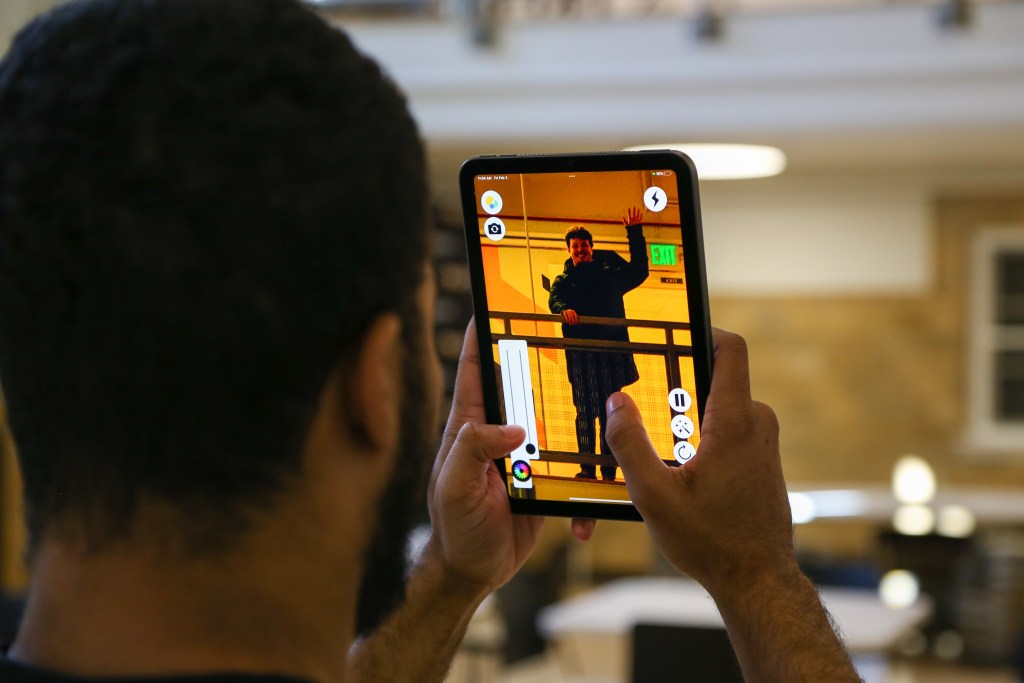


You can get the ReboKeh app on the iOS App Store for free and try it out for yourself.
Source: Technical.ly
About ReBokeh
The founder of ReBokeh, Rebecca Rosenberg, was diagnosed with Oculocutaneous Albinism as a baby, and struggled to find suitable assistive technologies during her school years. Feeling frustrated with inadequate solutions, she attended a “technology meeting” at the Commission for the Blind and Visually Impaired at 17, where outdated options were presented to her. This experience made her realize the significant gap in modern technologies for people with visual disabilities and the need for improvement. Motivated by this, she founded ReBokeh to develop personalized assistive technologies that cater to the unique needs of individuals with vision impairment, aiming to empower them and make them feel seen and understood.
Watch the video below to learn more about what Rebecca is building with ReBokeh.
This blog was written mostly using chatGPT, a potential tool for increased accessibility. Do you think this is an appropriate use of chatGPT? Why or why not? Let me know!
The post Johns Hopkins Joins Forces with ReBokeh to Enhance Low Vision Assistive Technologies appeared first on Assistive Technology Blog.


