

This month’s ASAT feature comes to us from Dr. Karen Parenti, MS, PsyD CEO/Executive Director at Special Friends Foundation. To learn more about ASAT, please visit their website at www.asatonline.org. You can also sign up for ASAT’s free newsletter, Science in Autism Treatment, and like them on Facebook!
I am a parent of a young man with autism. I also work in the area of law enforcement. What are some important considerations when teaching first responders and law enforcement personnel how to interact with individuals with an autism spectrum disorder?
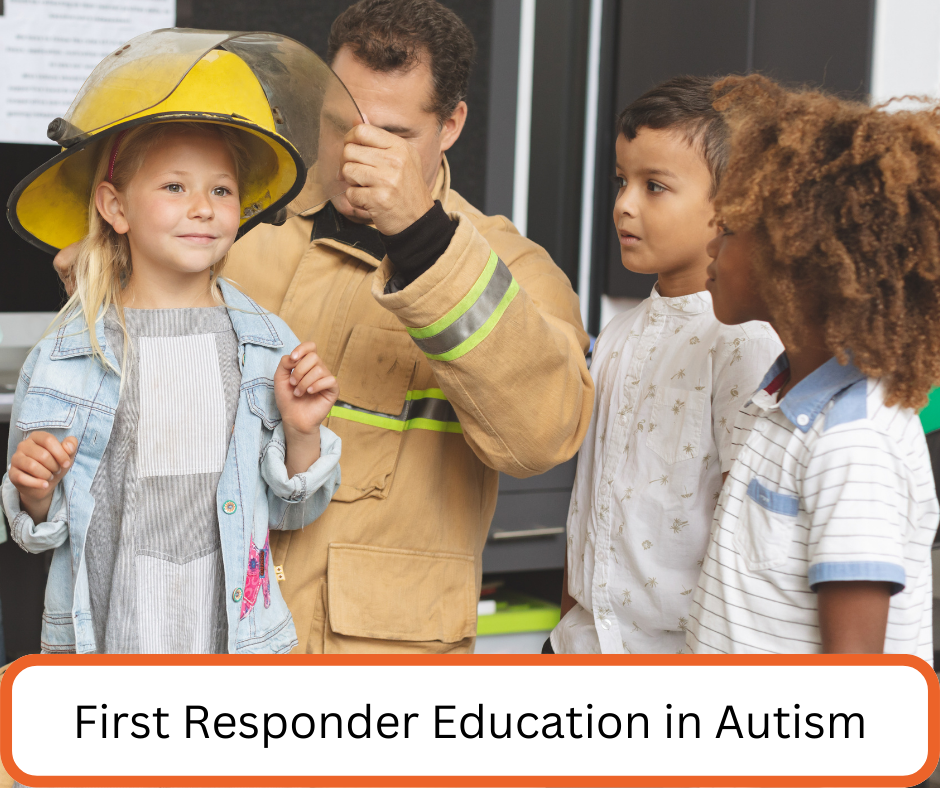
This is a very important question and one in which many local communities continue to place their focus. In addition, treatment of individuals with autism spectrum disorder (ASD) by law enforcement is a common worry for parents or caregivers. As such, the topic requires training to increase awareness of ASD for first responders and local community members, as well as collaboration between service providers and law enforcement. As in any crisis or challenging situation, the main focus should be on positive and preventative approaches, as most behavioral crises with individuals with ASD can be avoided or lessened. To promote awareness on the part of first responders and prevent crises, ASD service providers should regularly and proactively prepare individuals with ASD for a possible encounter with emergency personnel and law enforcement using understandable language, pictures, books, or video models about emergencies, so they know what to expect and how to respond. Additionally, building ongoing rapport and familiarity between individuals with ASD and their local police or fire departments might help ensure the person with ASD perceives the first responder as a helper when a behavioral or medical event occurs. In many cases, situations will arise that require emergency intervention by first responders because of the unique challenges and behavioral escalations that commonly occur with individuals with ASD. Therefore, training for first responders is of the utmost importance.
Police officers consistently and expertly respond to a large number and variety of emergency situations daily. Each emergency has its own unique characteristics, and so do the individuals involved in that crisis. First responders and police receive standard and rigorous training on how to respond to emergencies compassionately and effectively. This training, while appropriate and efficient for most situations, is not necessarily the best way to respond to a child or adult who is diagnosed with ASD. Unfortunately, this may lead to a tragic outcome such as injury or death.
Whether the emergency is a medical or behavioral crisis, understanding ASD and how someone with ASD might behave are crucial to ensuring a favorable resolution to any incident. Individuals diagnosed with autism may have heightened emotional responses in these volatile and stressful situations. For persons with ASD, emergencies are difficult to comprehend. During these uncertain and confusing events, a person with ASD may fail to respond to vocal directions, may exhibit a startle response when touched, may run when addressed, or may engage in self-injurious or aggressive behavior.
For emergency responders, interacting with individuals with ASD can seem ambiguous and unpredictable. Therefore, it is essential that emergency personnel learn to respond as sensitively and effectively as possible to individuals diagnosed with ASD, so attempts to speak with or care for the individual do not inadvertently cause the individual’s behavior to escalate. As you may know, this is especially important during a medical crisis because individuals with autism cannot always communicate feelings of pain or discomfort. A person with ASD may already be feeling frustrated and possibly agitated by their inability to convey their concerns and needs, thus when approached, that individual may respond in an unpredictable and unconventional manner. It is important that first responders be prepared for such unusual responses, incongruent emotions, and failure to respond to directives and questions.
In addition to providing police officers and first responders with information about autism symptoms more generally, an important next step is to teach first responders how individuals with ASD might behave in a crisis. In particular, emergency personnel need to understand how individuals with ASD might act when they are scared, agitated, confused, overwhelmed, or in pain.
A Child or an Adult Diagnosed with an Autism Spectrum Disorder May:
- Avoid eye contact.
- Walk away from family residence or group home to stores, shopping centers, local pools, or other places they enjoy. They may wander into traffic, not understanding environmental dangers.
- Be overstimulated and not comply appropriately to police or first responders’ instructions. For example, they may not respond to directives such as “come here”, “get out of the street” or “let me see your hands.”
- Become preoccupied with certain objects or interests, such as planes, trains, fire trucks, or movies.
- Repeat or echo phrases, words, or actions.
- Not know how to relate, talk, or play with others.
- Have sensory sensitivity, manifested by stereotypical behaviors which may include covering their ears, flapping their hands, spinning, toe walking, or making unusual noises among others.
- Become agitated due to the disruption in their routine.
- Have unusual reactions to the way things in the environment look, feel, smell, sound, or taste.
- Not speak at all or may not be able to communicate their wants or needs effectively.
- If verbal, may have difficulty understanding questions or may respond noncontextually. For example, they may simply script from a movie, speak about their special interests, or provide answers that appear to be evading the questions posed.
- Be unable to communicate that they are in pain.
A first responder will be able to interact more appropriately with a person with autism if he or she is able to recognize that the person may have ASD. It may also be helpful if the first responder becomes familiar with the following crisis response and intervention safety habits.
Crisis Response and Safety Habits:
- Take 30 seconds to assess the situation and the scene before responding.
- Remain calm.
- Use an even, controlled tone of voice with minimal directives, including simple phrases and visual cues such as pointing or using simple gestures that may be easily understood by minimally verbal individuals.
- Pay close attention to the person’s body language, tone of voice, gestures, and any other signs of potential fear or agitation.
- Practice trauma-informed care and assume that everyone has experienced some type of trauma and is easily startled.
- Respect personal space, except when it is necessary to approach the person. Remember that getting too close may increase agitation in some individuals with ASD. Ask the person or someone familiar with the individual with ASD what they want/need while maintaining a safe distance.
- If possible, recruit familiar and trusted persons to assist you in understanding how to approach the individual.
- Reduce stimulation and allow time and space for the person to process information and requests. For example, it might be helpful to clear the area of additional people, turn off the lights of the emergency vehicles, and eliminate other extraneous noises as much as possible.
- Be prepared and practice situational awareness. Know your surroundings and the location of the closest exit.
- Deflect aggression and block self-abuse when and if possible. If a physical intervention is necessary because the situation is unsafe, establish control in a safe, non-threatening manner. Remind the person that you are there to help.
Awareness is Essential
When police officers and first responders receive training in interacting and working with individuals with ASD, incidents in the community may be resolved quickly and more effectively. With quality training, headlines reporting distressing incidents, such as that above, may be a thing of the past. Instead, the type of training discussed here, when offered regularly to our dedicated police officers and first responders, could result in positive approaches like this:
Autism awareness is essential for all members of the larger community but is truly imperative for first responders. In the absence of information, first responders may misinterpret the behavior of a person with ASD, may ascribe hostile intent to agitated behavior, may inadvertently escalate the behavior of the individual, or may fail to safely calm the individual. In cases such as these, there can be dangerous consequences. An opportunity exists for ASD service provider agencies to provide specialized training to local first responders. Providers can contact law enforcement officials and other emergency personnel to offer informational training sessions on a local level. In our experience, the administrators are routinely grateful and accommodating about arranging such training.
First responders need a dual skill set. First, they need accurate information about persons with ASD, including their behavioral characteristics, and secondly, they must use skills to de-escalate the situation when they engage with a person with autism who is in a confused and agitated state. With community outreach, negative outcomes can be averted, bridges can be built, and wider acceptance of persons with ASD can become a reality.
Additional Information and Resources
The following resources provide additional information related to first responders:
- Living with Autism – Autism Information for Law Enforcement and other First Responders
- Training for Indiana’s First Responders: Recognizing and Responding Appropriately to Individuals with Autism Spectrum Disorders
- POAC Autism Services –First Responders Training
- First Responder Autism Certification (ibcces.org)
About the Author
Dr. Karen Parenti works as the CEO/Executive Director of Special Friends Foundation. She has extensive experience in ABA and in developing and overseeing group homes, day services, and rehabilitative programs for individuals with intellectual and developmental disabilities and autism. She also serves as the treasurer of the MAX association’s board where she continues to advocate for the needs of the individuals she serves. Karen earned her Bachelor’s degree in psychology from York College of PA, her Master’s Degree in Human Services Administration from Springfield College in Wilmington, DE and her Doctorate Degree in Clinical Psychology from Immaculata University.
This article has been republished with permission from https://asatonline.org/research-treatment/clinical-corner/first-responders/
The post First Responder Education in Autism appeared first on Different Roads to Learning Blog.


