

By: Nicole Gorden, M.S., BCBA, LBA
Helping children with autism understand and express emotions is beneficial for their social and emotional development. One effective way to support this is by incorporating emotion flashcards into natural environment teaching (NET) activities. Below, we will explore the benefits of using emotion flashcards, provide guidance on incorporating them into everyday activities, and highlight their impact on promoting emotional understanding in children with autism. Whether you’re a parent, clinician, or teacher, this resource will empower you to create engaging and effective learning experiences for children with autism.
Understanding Emotion Flashcards
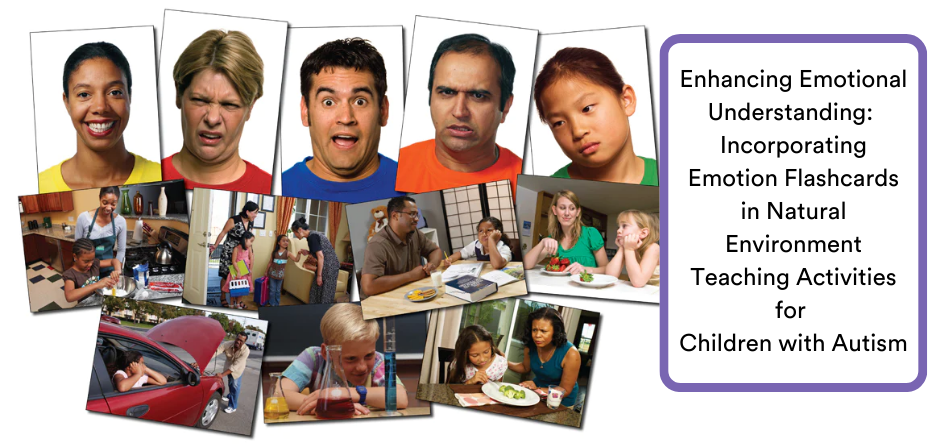
Emotion flashcards are visual aids that depict various emotions through pictures or illustrations. These cards provide a concrete representation of emotions, making them accessible and easily understandable for children with autism. By using emotion flashcards, we can teach children to identify, label, and understand their own emotions, as well as recognize and empathize with the emotions of others.
Benefits of Emotion Flashcards in NET Activities
- Visual Supports: Emotion flashcards offer visual supports that enhance communication and comprehension for children with autism. The visual nature of the cards helps bridge the gap between verbal and nonverbal communication, enabling children to better grasp and express emotions.
- Generalization: Incorporating emotion flashcards into naturally occurring activities allows children to practice recognizing and understanding emotions in various contexts. This promotes generalization of skills, helping children transfer their knowledge of emotions from flashcards to real-life situations.
- Personalization: Emotion flashcards can be customized to reflect the individual experiences and preferences of each child. Personalized cards featuring familiar faces or specific situations can help children relate to the emotions depicted and make the learning experience more meaningful and relevant.
Incorporating Emotion Flashcards in NET Activities
- Start with Basic Emotions: Begin by introducing a small set of basic emotions, such as happy, sad, angry, and surprised. Use the emotion flashcards during play activities that naturally evoke these emotions. For example, during playtime, show the happy card when the child is engaged in an enjoyable activity.
- Emotion Charades: Engage the child in a game of emotion charades using the flashcards. Take turns acting out an emotion while the other person guesses which emotion is being depicted. This activity promotes perspective-taking and understanding of nonverbal cues.
- Emotion Identification: Show the child a flashcard and ask them to identify the corresponding emotion. Provide reinforcement and praise for correct responses. Gradually increase the complexity by introducing more nuanced emotions, such as excited, frustrated, or worried.
- Emotion Role-Play: Use the flashcards to create role-play scenarios. Assign different emotions to the child and yourself, and act out how each emotion might be expressed in various situations. Encourage the child to mimic the facial expressions, body language, and tone of voice associated with each emotion.
- Emotion Matching: Create a matching game using emotion flashcards and corresponding facial expression cards. Have the child match the emotion flashcards with pictures of people displaying the corresponding emotions. This activity helps reinforce recognition and understanding of emotions in different contexts.
- Emotion Sorting: Provide a variety of flashcards representing different emotions and ask the child to sort them into categories based on positive and negative emotions or high-intensity and low-intensity emotions. This activity encourages categorization and differentiation of emotions.
- Emotion Journaling: Incorporate the use of emotion flashcards in a journaling activity. Have the child select a flashcard that represents how they are feeling at different times of the day and encourage them to write or draw their experiences and reflections.
Incorporating emotion flashcards into natural environment teaching activities can be a powerful tool for promoting emotional understanding in children with autism. By using visual supports, personalized experiences, and engaging activities, we can help children identify and understand emotions, enhance their social interactions, and develop important skills for lifelong emotional well-being. Whether you’re a parent, clinician, or teacher, incorporating emotion flashcards into everyday activities can create meaningful learning experiences that support the emotional growth of children with autism.
About the Author
Nicole Gorden, M.S., BCBA, LBA has over 14 years of experience implementing Applied Behavior Analysis principles with the Autism Population. She currently works for Comprehensive Behavior Supports in Brooklyn, NY.
The post Enhancing Emotional Understanding: Incorporating Emotion Flashcards in Natural Environment Teaching Activities for Children with Autism appeared first on Different Roads to Learning Blog.


