

Description

Gary Jesch, owner of Invirtua and a digital puppeteer who has been in the live animation industry for 20 years, was inspired to see what he could do for those on the autism spectrum.
Eye contact, social skills & social interaction, and difficulties with attention and concentration are some of the many challenges children with autism face on a regular basis. Going to therapy sessions to develop or enhance these skills is not unusual for these children. However, sessions with an adult therapist can be dull, mundane and not fun. Therapists most likely know that too, but how would they make their therapy sessions more interesting for the children and make sure they grasp everything they are being taught? Another challenge for the therapists is that there are a number of established and emerging interventions, and they would want to stick to them without bringing in another medium that would water down or compromise the details of interventions.
This is where Invirtua 3D Digital Puppeteer's digital avatars come into the picture. Instead of doing a direct one on one session with the child, a therapist can introduce an animated avatar that helps energize the session. The therapist is still involved. They are still driving the session - they are the ones who control the avatars and use them as a medium to interact with the children. And for the children, the session get more enjoyable and fun!
This is how the setup works - the therapists client room will have a monitor, webcam and speakers
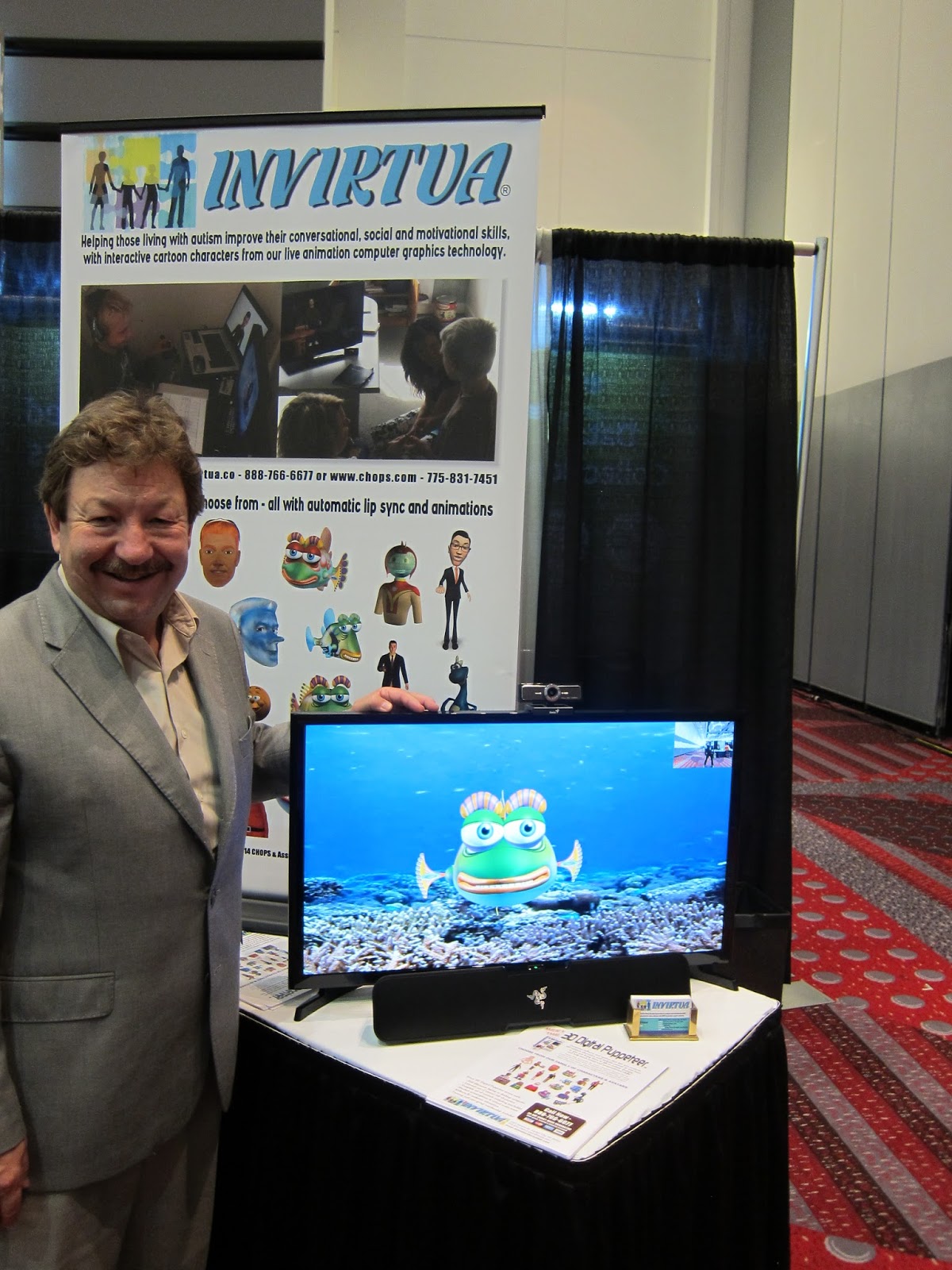
One thing nice about these avatars is that they intersect and integrate well with therapeutic approach. They don't add anything overbearing to the session nor do they try to change any of the therapy processes - all they do is bring in a mechanism that helps children grasp knowledge without any unnecessary stress.
The complete system consisting of a high end computer, software, tablet and joystick can be purchased for $2,790 from Invirtua's website. To put things in perspective, a similar setup would have cost around $30,000 two years ago. The low cost of this system also makes it possible for parents to buy and install it at home, and start using it with their child while they are waiting to be aligned with a therapist. Sadly, it can take anywhere from 6 - 12 months before a child can meet their therapist.
Invirtua would keep developing and enhancing this technology. In the future, we may see it on Xbox, virtual reality devices like Oculus and even augmented reality (AR) devices like Microsoft's Hololens.
Invirtua 3D Digital Puppeteer system is available to purchase through Invirtua's website. It takes 2-3 weeks to deliver and is shipped worldwide.
Gary introduced this system at the Autism Society National Conference in Denver last week. In the video below, he talks in detail about his inspiration behind these avatars, how this system works, shows us why and how a therapist would use it, and talks about pricing and future plans.
Adam Mercier, a visitor at the conference who happened to be at Gary's booth, tried it out while I was waiting to talk to Gary. Adam has Asperger's, and after trying out the avatars briefly, was quite excited and wished he had access to such a system while growing up in the '90s.
Source: Assistive Technology Blog
Related Feed Entries
In a landmark move for the global assistive technology community, the Ministry of Electronics & IT recently unveiled a comprehensive strategy to transform India from a text-heavy digital landscape into a voice-first ecosystem. Launched at the India AI Summit Expo 2026, this initiative is anchore…
28.04.2026 · From Assistive Technology Blog
By Sam Blanco, PhD, LBA, BCBA
There’s a famous quote from W. Edwards Deming that says “Without data, you’re just another person with an opinion.” While Deming wasn’t a behavior analyst, this statement aligns closely with how BCBAs approach their work.
Most BCBAs will report how much they love …
28.04.2026 · From Different Roads to Learning
Adidas has announced the launch of the Supernova Rise 3 Adaptive, its first performance running shoe specifically designed for athletes with disabilities. Developed over several years, the shoe was inspired by Chris Nikic—the first person with Down syndrome to complete an Ironman—who previously stru…
10.04.2026 · From Assistive Technology Blog
Dear Friends,
I never write for our blogs but I wanted to share this glimmer of hope.
This weekend, an acquaintance of a friend of a friend asked me to view a French film called “No Filter Café” at a Socially Relevant Film Festival in NYC.
It’s a film in French about 5 young men…
31.03.2026 · From Different Roads to Learning
With the April 24, 2026, deadline for the updated ADA Title II regulations rapidly approaching, the landscape of digital inclusion is shifting from reactive accommodation to proactive accessibility. This mandate requires large public institutions to ensure that every facet of their digital presence—…
28.03.2026 · From Assistive Technology Blog
Rate
Info

Recommend

