

Description
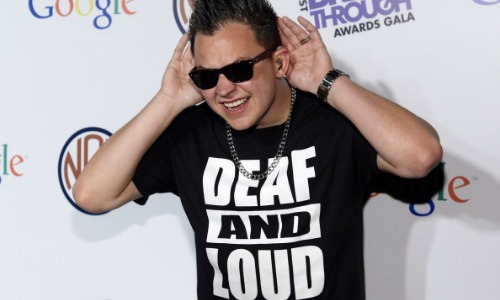
Hearing people always assume that there is only one way to enjoy music, and that is by listening/ hearing to it. In a world dominated and driven by able bodied privilege, that assumption is prevalent, and when a deaf person shows up at a concert, heads turn. However, deaf people can enjoy music in ways that differ from how hearing people enjoy music, but they can definitely derive pleasure out of it.
First of all, deafness does not mean that someone does not hear anything at all - there are varying levels of deafness. Second, deaf people can feel the vibrations produced by the music being played and consume those vibrations through their body. The humming sound produced by picking a bass string or the boom of the drums can be felt very easily by them. The lyrics evoke different types of feelings, and the combination of vibrations and lyrics is how deaf people enjoy music. Someone who wears hearing aids or Cochrane implants may have some enhanced levels of hearings but for those who don't, they turn up the volume so they can feel the vibrations from beats and bass more strongly as they read the lyrics.
Watch the video below to see how a deaf person how she hears and experiences music.
Concerts for deaf people are a different experience. Typically the music at concerts is very loud, and that can damage hearing aids and someone's hearing. In such a situation, deaf people turn off their hearing aids which may make them hear music even less but then they enjoy the music through amplified vibrations being produced by large speakers around them. It is also common for bands/ musicians to have sign language interpreters who sign song lyrics for their deaf audience. This way, deaf people feel the music and also get to know the words to the songs!
Here's an example of a sign language interpreter at a Red Hot Chili Peppers concert.
However, deaf people don't have to just depend upon vibrations and sign language interpreters to enjoy music. D-PAN (The Deaf Performing Arts Network), is a not for profit that strives to make music and music culture more accessible to deaf people. D-PAN recreates music videos of popular songs, and these videos have deaf and hard of hearing actors who express song lyrics through ASL. D-PAN does a great job of including an audience (deaf people) in an art form that primarily caters to a hearing audience, as well as give recognition to deaf and hard of hearing artists everywhere.
But wait, there's more! Here's Sean Forbes, co-founder of D-PAN, a deaf musician himself, singing and also signing the words in this video.
As Sean says in his video above, "Something inside me is so intense, evidently it is bringing out my sixth sense".
Additional readings: Gapers Block, Quora, D-PAN
Image Source: Watchloud
Source: Assistive Technology Blog
Related Feed Entries
Part 1: Why Great Clinicians Can Struggle as Supervisors
by: Cheryl Davis, PhD, BCBA-D, Dana Reinecke, PhD, BCBA-D
Clinical expertise does not automatically translate into supervisory expertise. Supervisors need explicit instruction, modeling, practice, feedback, and ongoing support, just like…
12 days ago · From Different Roads to Learning
Starting April 1, disabled people across England will be able to travel by bus for free at any time of day. Previously, free bus passes were restricted to off-peak hours on weekdays (between 09:30 and 23:00), making it difficult for pass holders to commute to standard morning jobs or attend late-nig…
01.09.2026 · From Assistive Technology Blog
Fallbrook artist Joel Anderson, “The Artist of Smiles,” has his dog portraits on display at TERI Campus of Life in San Marcos through October 2026.
By Debra Muzikar
Last week I had the pleasure to assist Fallbrook artist Joel Anderson in hanging his dog series art outside Teri’s Co…
25.08.2026 · From The Art of Autism
This list is meant as a springboard for discussion and more awareness into the female experience with autism.
By Samantha Craft
Females with Autism: An Unofficial List
Section A: Deep Thinkers
A deep thinker
A prolific writer drawn to poetry
*Highly intelligent
Sees things at multiple levels, incl…
24.08.2026 · From The Art of Autism
The Biology of Breaking
By Jessica Penot
An autistic meltdown is an involuntary loss of behavioral, emotional, and physiological regulation that occurs when an autistic person’s ability to cope with sensory, cognitive, emotional, or environmental demands is exceeded. Unlike a temper tantrum, a meltd…
19.08.2026 · From The Art of Autism
Rate
Info

Recommend

