

Description
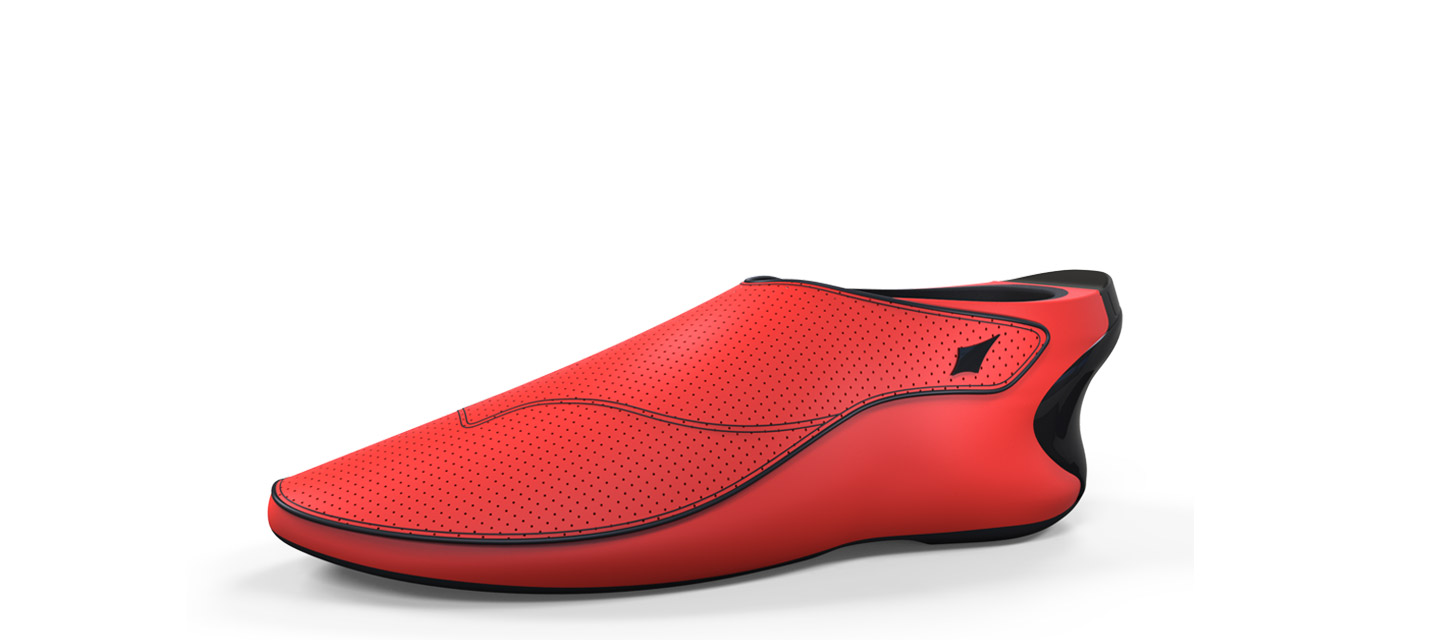
If you walk a lot to get from one place to another, you probably appreciate a good pair of shoes that make your walk comfortable. What if that same shoe could tell you where to go?

Lechal shoes and insoles, that connect to a phone app via bluetooth do exactly that. All one has to do is enter their destination in the phone app and get going. While walking, the shoes slightly vibrate whenever the person is approaching a turn. The right shoe would vibrate for a right turn, and the left shoe for a left turn. There is no need to listen to the smartphone for directions. It sits in the pocket while the person walks conveniently to their destination!
Lechal was specially designed keeping blind and visually impaired people in mind. With so many other features added to it, it's become a shoe with sighted people can wear.
Lechal not only provides directions via haptic feedback but also counts steps taken, total distance walked, calories burnt etc. So a blind person, who wants to track all those metrics, doesn't really need another smart device or app - Lechal will do it for them!
Here are a couple of videos that show how Lechal footwear works.
Lechal website
[Thanks for sharing, Abhinav and Swetha!]
Source: Assistive Technology Blog
Related Feed Entries
By James T. Ellis, PhD, BCBA-D and Christine Almeida, MSEd, EdS, BCBA
Image by Chessie Almeida
Hi! Hello! Welcome to the Socially Savvy Second Edition!
Almost 20 years ago, we (Christine and Jim) decided to develop a social-skills assessment, which eventually became Socially Savvy. At the t…
6 days ago · From Different Roads to Learning
Prefer listening? Try the audio overview of this post by pressing play below.
When we think of robots, we usually picture rigid machines on a factory floor. They require exhaustive programming, massive datasets, and perfectly controlled environments to function. If one thing is out of place, …
12 days ago · From Assistive Technology Blog
In a landmark move for the global assistive technology community, the Ministry of Electronics & IT recently unveiled a comprehensive strategy to transform India from a text-heavy digital landscape into a voice-first ecosystem. Launched at the India AI Summit Expo 2026, this initiative is anchore…
28.04.2026 · From Assistive Technology Blog
By Sam Blanco, PhD, LBA, BCBA
There’s a famous quote from W. Edwards Deming that says “Without data, you’re just another person with an opinion.” While Deming wasn’t a behavior analyst, this statement aligns closely with how BCBAs approach their work.
Most BCBAs will report how much they love …
28.04.2026 · From Different Roads to Learning
Adidas has announced the launch of the Supernova Rise 3 Adaptive, its first performance running shoe specifically designed for athletes with disabilities. Developed over several years, the shoe was inspired by Chris Nikic—the first person with Down syndrome to complete an Ironman—who previously stru…
10.04.2026 · From Assistive Technology Blog
Rate
Info

Recommend

